Spring arrives in Laglio without announcement. No festivals, no fanfare, no crowd waiting at the ferry dock. One morning in late March, the wisteria along Via Vecchia Regina simply starts to bloom, the hills shift from winter grey to something close to gold, and the fishermen who have worked this narrow stretch of water for generations go about their business as though the season change is nobody else's concern. While busier Como towns begin calibrating for summer arrivals, this small village on the lake's western shore is still very much its own.



The Water Turns a Color That Has No Name
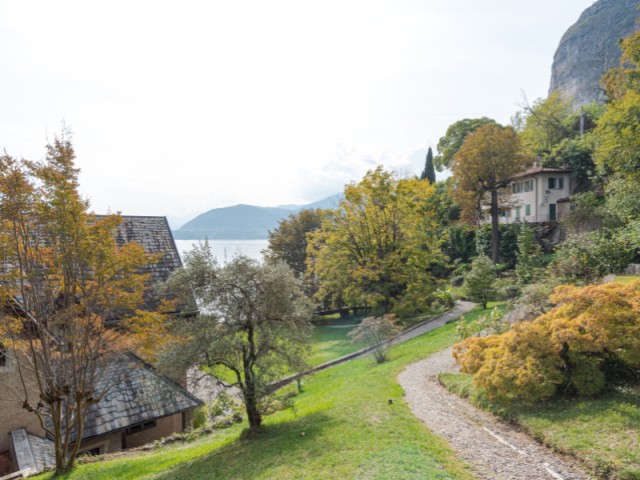
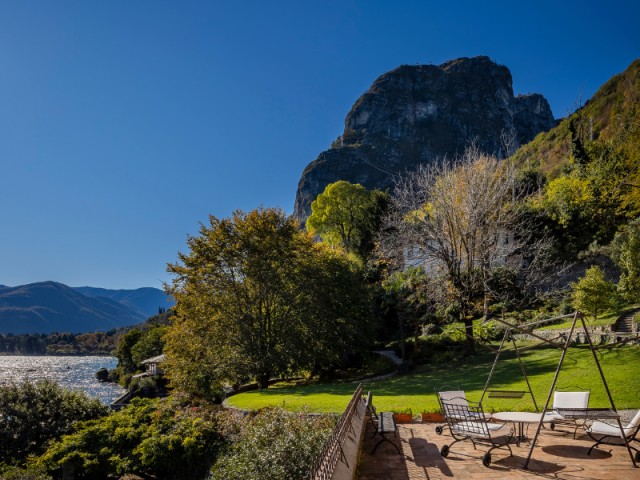
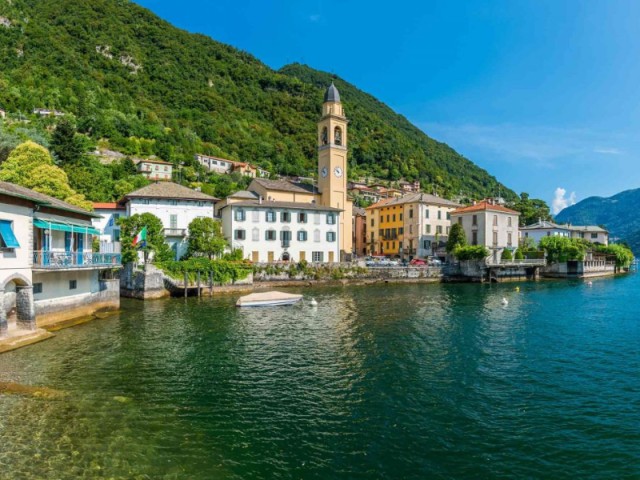
Stand at the lakefront in April and you notice it almost immediately. When the underwater weeds begin to bloom in spring, the lake takes on an intensity of green that looks less like northern Italy and more like somewhere tropical. Laglio sits at one of the narrowest passages on the entire lake, where the distance from bank to bank contracts to roughly 675 meters. The surrounding mountains press close and reflect their slopes straight into the water, and the effect is startling, almost electric. Sit at one of the waterfront tables outside Da Luciano Bottega e Caffe on Via Vecchia Regina, order a glass of local red, and just watch the color of the water shift with the light. The village has been doing this every spring for centuries. Nobody here seems particularly surprised by it.
The Village Behind the Village
Most travelers who make it to Laglio see the lakefront and turn back. What they miss is the old town that climbs immediately behind it, a tangle of stone lanes where the 17th-century Church of San Giorgio stands on foundations considerably older. The church preserves interior stuccoes created by Stefano Salterio, a craftsman from Laglio itself, which gives the work a particular intimacy that no guidebook has ever adequately explained.
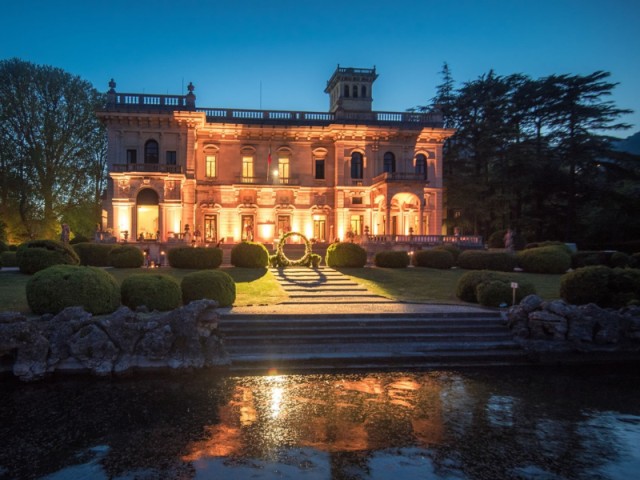
The five hamlets of the Laglio commune climb higher still: Germanello, Ossana, Soldino, Ticee, and the sun-exposed hillside settlement of Torriggia, the most panoramic of them all. In spring 1922, the Italian poet Ada Negri, the first and only woman elected to the Academy of Italy, spent several months at Villa Gatti-Mosca in Torriggia and wrote a portion of her late work there. She was not the first person to find in these hills a particular clarity of thought, and she would not be the last.
When to Come and What to Expect
April and May make the clearest argument for visiting before the rest of the lake catches up. The roads are manageable, the restaurants are unhurried, and the village carries on without performance. From Como, the C10 bus along the SS340 Via Regina reaches Laglio in under thirty minutes. The ferry connects to Cernobbio and Como with enough frequency to build a full day around.
There are no information boards here, no curated walking tours, no guided routes with flag-bearing leaders. What exists instead is a lakefront that turns the color of shallow tropical water in spring, an old town that rewards the curious, and a deli where the owner already knows which wine to open. That is enough. That has always been enough.