The upcoming Art Moderne et Contemporain Day Auction at Sotheby’s Paris marks a pivotal moment for collectors seeking works that bridge the gap between historical significance and verified market value.
This curated selection features three mid-century masters whose pieces are as much a study in impeccable provenance as they are in artistic innovation. By examining the life stories of these works, we see how institutional recognition and an unbroken chain of custody continue to define the "Social IQ" of the global art market.
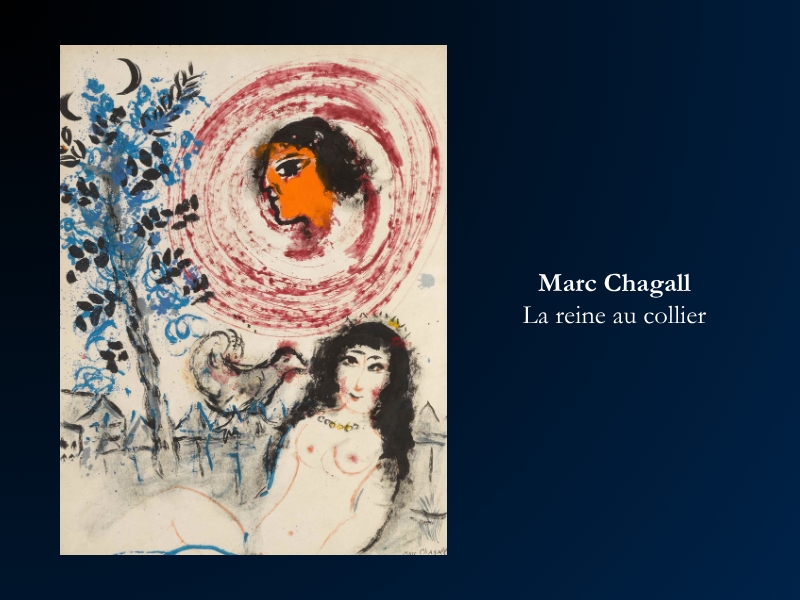
Marc Chagall: La reine au collier (1959)
This 1959 work is a definitive example of Chagall's lyrical style. Executed in watercolor, blue ink, and India ink, it carries a distinguished lineage from the Galerie David et Garnier in Paris to a private American collection where it remained for generations.
- The Narrative: Chagall captures a dreamlike subject that defines his post-war period, combining technical precision with his signature poetic vocabulary.
- Provenience: Its transition from Paris to New York in the early 1960s highlights the global movement of quality European art during that era.
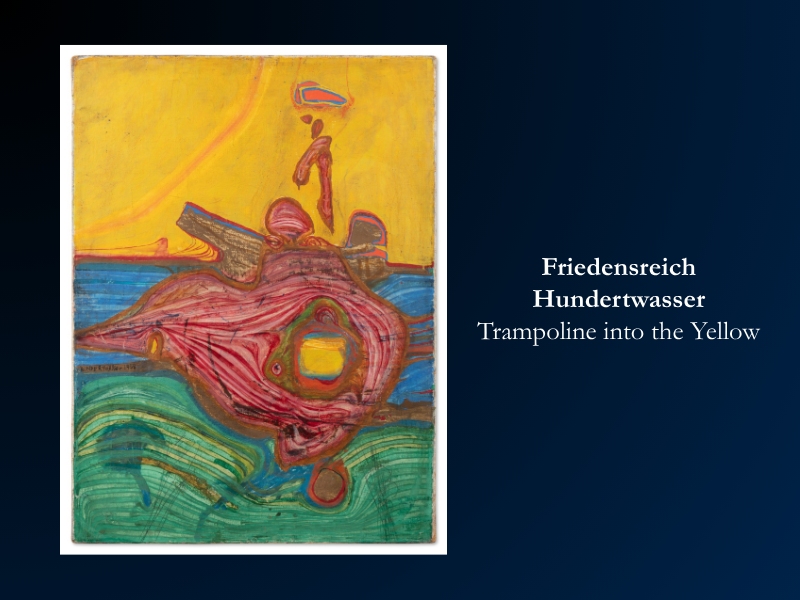
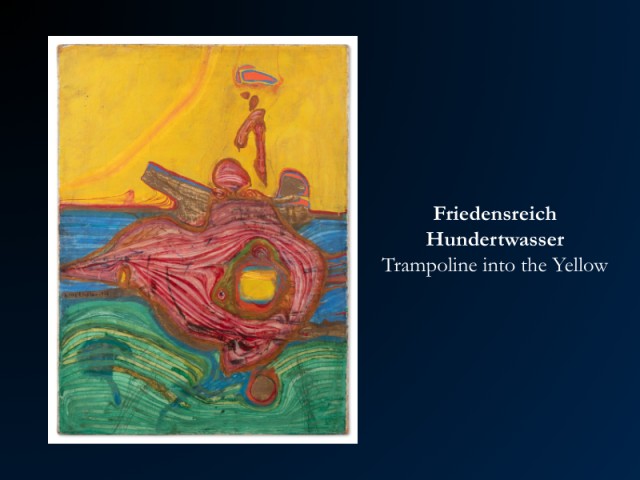
Friedensreich Hundertwasser: Trampoline into the Yellow (1958)
Coming from the Kawamura family collection in Japan, this 1958 work is a complex assembly of oil, tempera, and indelible pencil. Hundertwasser was a pioneer of organic forms, and this piece is a central part of his early catalogue raisonné.
- Material Complexity: The artist used packing paper primed with chalk and PV, mounted on Spanish canvas, creating a unique texture that resists standard categorization.
- Global Exhibition: Before reaching Japan, the work was exhibited in Rome, Cologne, and Paris, illustrating the international demand for the artist's visionary approach to color and space.
- Cultural Weight: This piece represents a finished world of mid-century Austrian art that is increasingly rare to find in private hands.
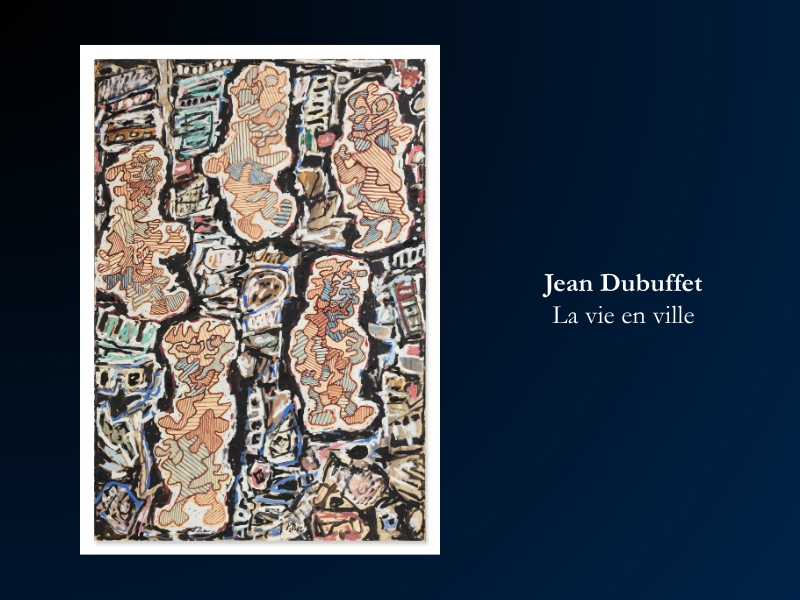
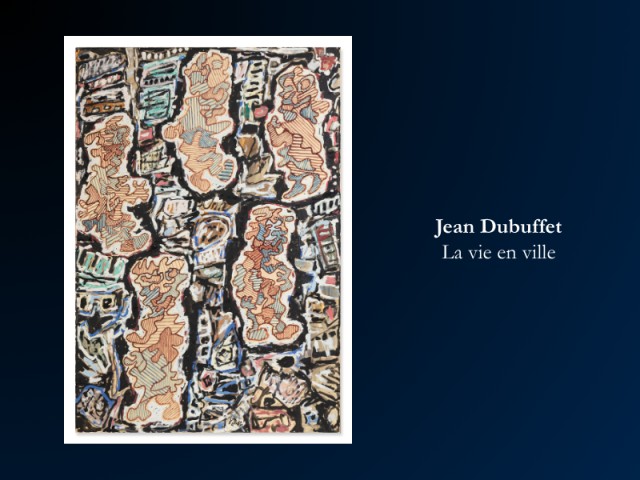
Jean Dubuffet: La vie en ville (1962)
Executed in August 1962, this large scale collage of gouache on cardboard is a vital piece from Dubuffet’s "L'Hourloupe" series. It captures the frantic energy of urban life through a stylized, interlocking cell-like structure that became the artist's most recognizable motif.
- Literature: The work is extensively documented in the "Catalogue des travaux de Jean Dubuffet," ensuring its status as a verified historical record.
- The Hourloupe Cycle: This series marked a major shift in the artist's career, moving toward a more structured and graphic language that defined his late work.
The Structural Value of Provenance
This year, the primary objective for any collector is the acquisition of Verified History. Pieces like the Chagall or the Dubuffet are not just beautiful objects: they are assets with a clear and unbroken chain of custody. When a work has been held by the same family since 1964 or exhibited at the Grand Palais, its market value is supported by its institutional recognition.
Quality in the art world is increasingly tied to this transparency. A work with a deep bibliography is harder to substitute and easier to defend in a selective market. For the collector on the Lario or abroad, these mid-century masters provide a stable foundation for a portfolio, bridging the gap between historical significance and modern aesthetic appeal.