The intersection of religious authority, technical mastery, and historical provenance defines the most sought after assets in the world of Himalayan art.
The market continues to reward pieces with a "closed" history, those once held in legendary collections and exhibited in the world’s major museums.
The Zimmerman Family Collection stands as a structural benchmark for this category. Collected primarily between the 1960s and 1970s, these works represent a terminal market for Himalayan bronze, where the value is anchored in the physical rarity of the objects and their impeccable exhibition history.
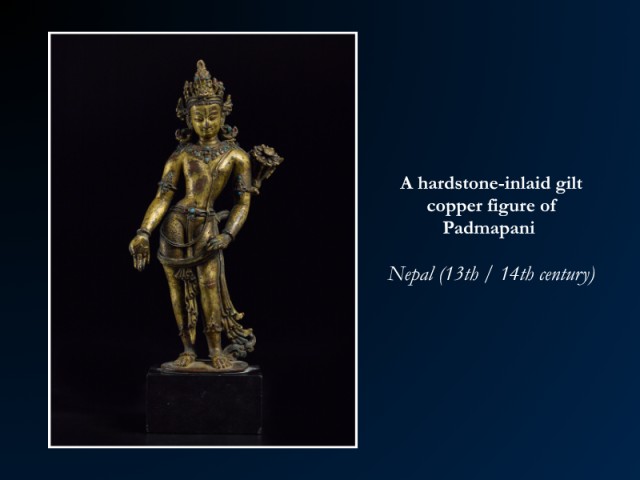
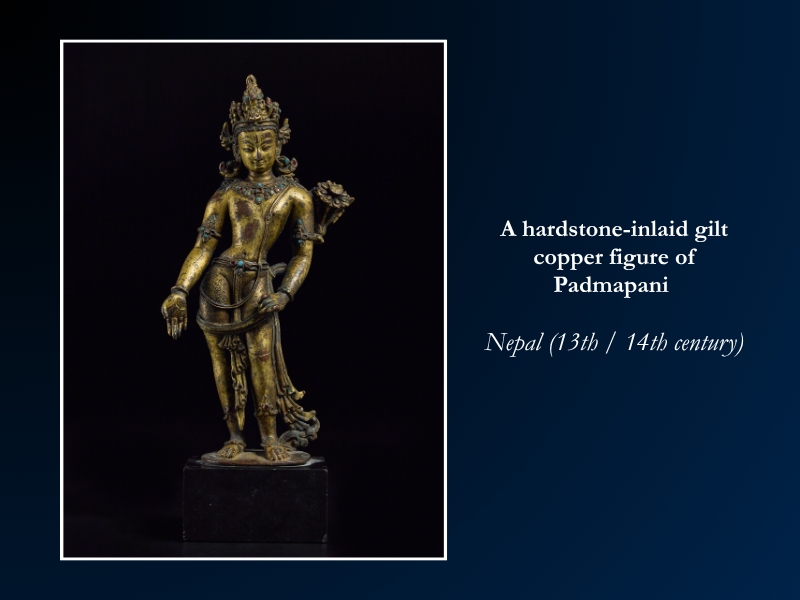
The Golden Era of Nepal: The 13th Century Padmapani
Representing the peak of Newar craftsmanship, the hardstone inlaid gilt copper figure of Padmapani (the lotus bearer) reflects the "Golden Age" of Nepalese art. During the 13th and 14th centuries, Newar sculptors were the primary artistic engines of the Buddhist world, commissioned by both Tibetan monasteries and the Mongol court of the Yuan dynasty.
The statue’s elegant tribhanga (triple bend) posture and the subtle combination of warm gilding and gems exemplify the idealized Buddhist vision of a princely savior. This piece serves as a macro signal of the refined indigenous style that flourished in the Kathmandu Valley before the era of mass regional expansion.
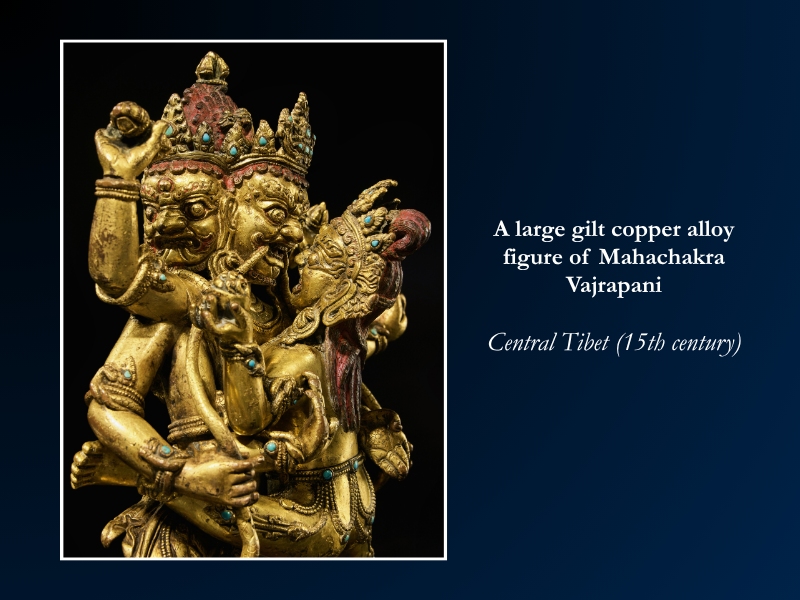
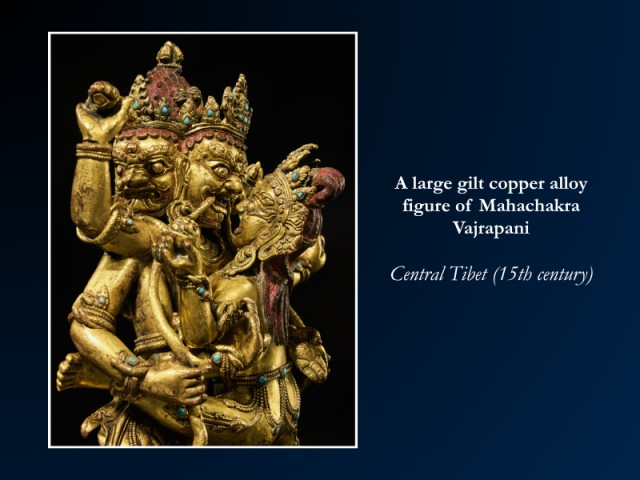
Tantric Complexity: The 15th Century Mahachakra Vajrapani
From a European private collection, the 15th century Mahachakra Vajrapani demonstrates the robust and intense imagery of Central Tibetan Tantric Buddhism. This wrathful deity is depicted in yab-yum (union) with his consort, a form used in deep meditational practices within the Gelugpa tradition.
The sculptor’s skill is visible in the anatomical strength of the limbs and the intricate details of the beaded swags and snakes. This figure subdues negative emotions, symbolized by the consumption of snake venom, transforming them into positive virtues. Its commanding presence and complex articulation make it a definitive example of 15th century Tibetan bronze casting.
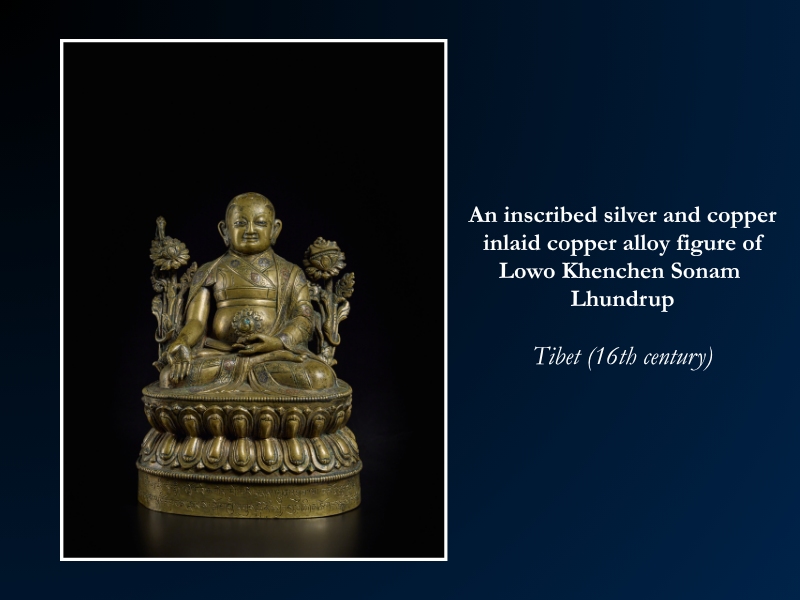
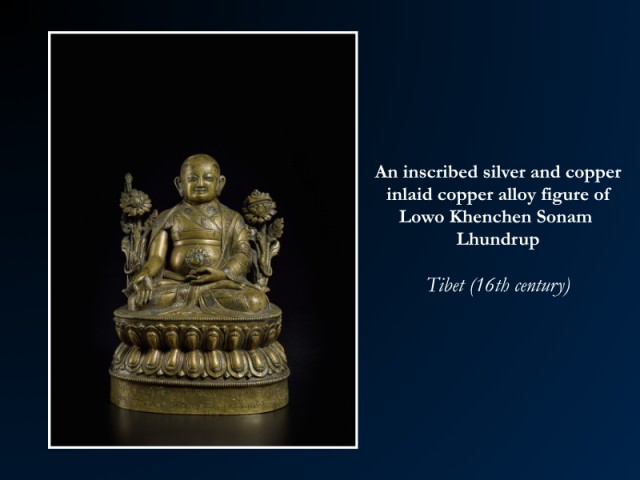
The Great Abbot of Mustang: A Study in 16th Century Power
A standout from the collection is the silver and copper inlaid figure of Lowo Khenchen Sonam Lhundrup. This 16th century sculpture is more than a devotional image. It is a political and intellectual portrait of the Great Abbot of Mustang (1456–1532).
- Iconography of Wisdom: The figure is assimilated to Manjusri, the bodhisattva of wisdom, marked by a flaming sword and a volume of the Prajnaparamita resting on lotus flowers.
- Technical Precision: The monastic robe is lavishly decorated with vegetal scrolls using a technically demanding copper and silver inlay. This polychrome technique is a characteristic feature of specialized workshops in Mustang and western Tibet.
- The Portrait Tradition: While many portraits of the Abbot emphasize his role as a stern teacher, this specific casting focuses on the varadamudra (wish granting gesture), a rare variation supported by the sculpture's dedicatory inscription.
The Structural Value of Provenance
We see that the most defensible investments in the art world are those with a "transparent" life story. The Zimmerman Collection is a prime example of why Provenance is the ultimate stabilizer of value. When a piece has traveled from the Brooklyn Museum to the Grand Palais in Paris, its authenticity and cultural significance are no longer subjects of debate.
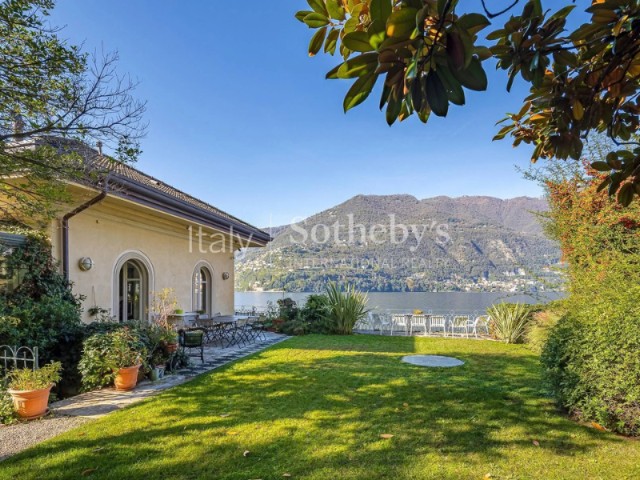
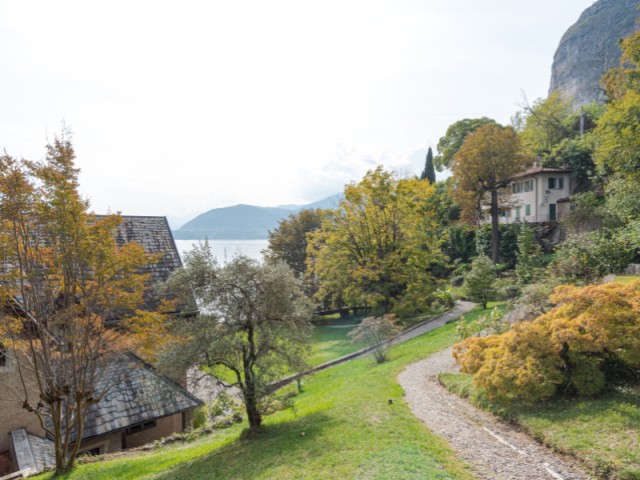
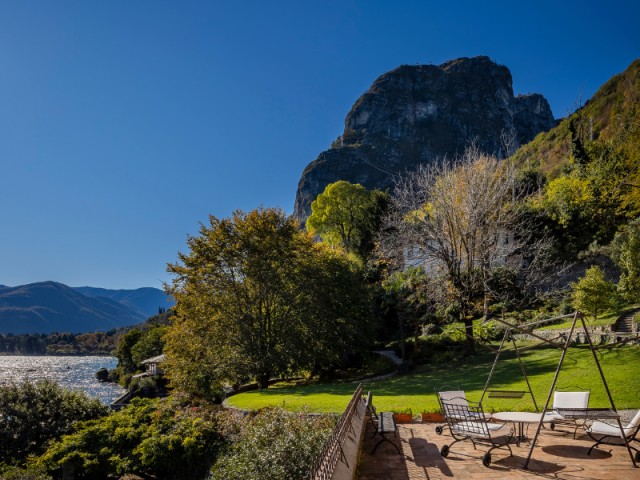
For the serious collector, these twelve treasures represent a "finished world" of acquisition. As with the historic villas of Lake Como, these sculptures cannot be replicated or substituted. Their value lies in their scarcity, their connection to the great masters of the past, and their survival through centuries of Himalayan history. In a selective market, these are the assets that remain structurally resilient.