A property without an address is, by definition, one that does not need to be found. It finds you.
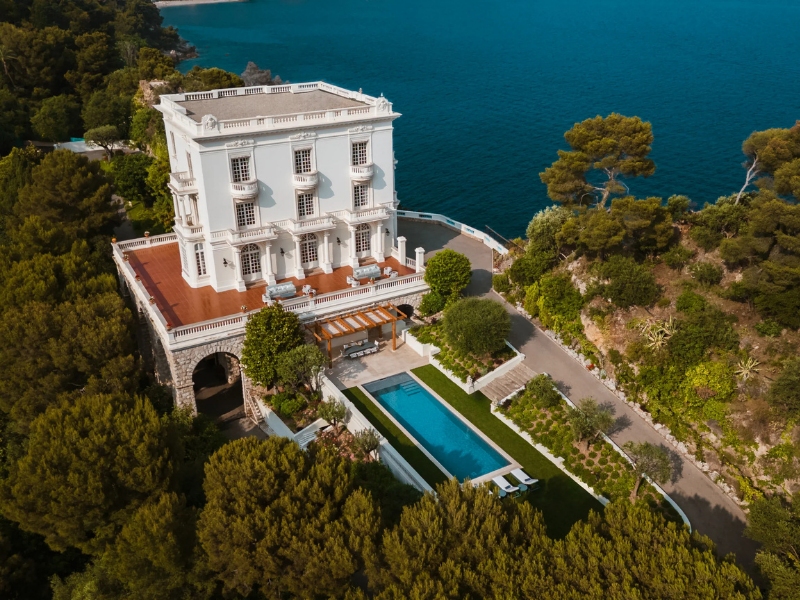
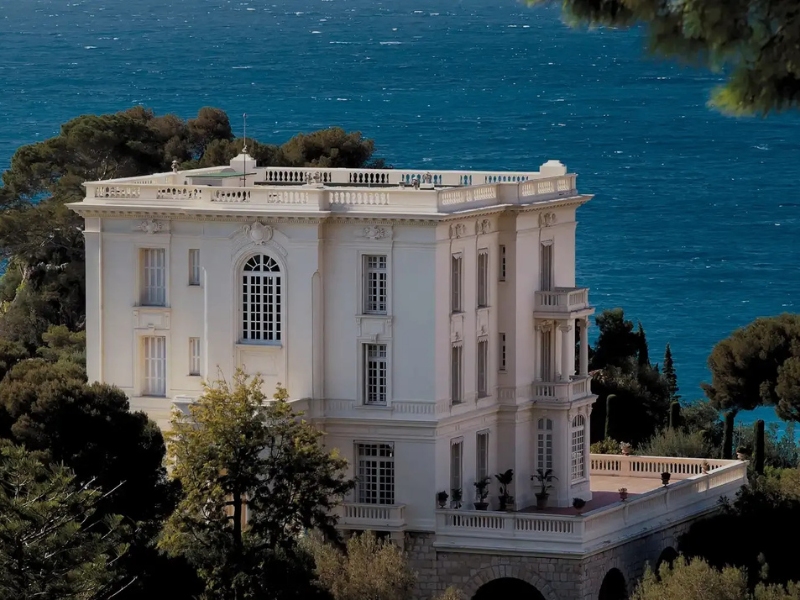
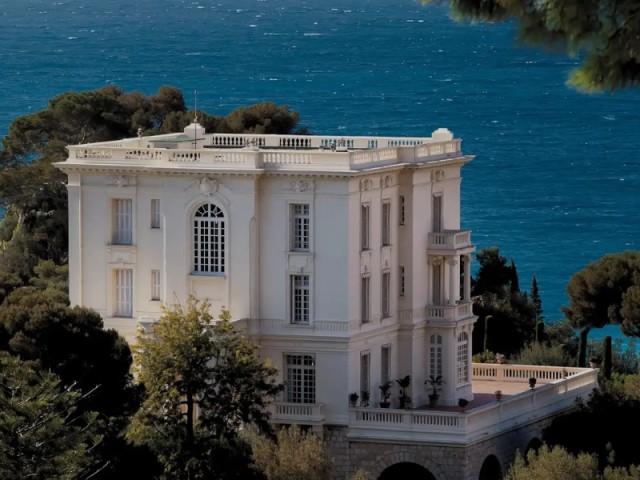
That is the logic Villa La Vigie has operated on since 1902, when British publishing magnate Sir William Ingram commissioned the estate on a private promontory above the Monte Carlo Beach, accessible only through two gates and a road that appears on no public map. When Karl Lagerfeld described it in 1988 as "the safest place in the world," he was not speaking about security in any conventional sense. He was speaking about permanence. About what it means to occupy a structure whose architecture refuses to negotiate with time.
A Site That Caught Claude Monet's Eye Before the Villa Existed
The site Villa La Vigie occupies had already established its credentials nineteen years before Ingram broke ground. In 1883, Claude Monet made his first visit to the Côte d'Azur and chose this precise promontory to set up his easel. The two canvases he completed there, both titled Monte-Carlo seen from Roquebrune, capture the bay of Roquebrune-Cap-Martin and the Principality in the particular Mediterranean light that shades of blue, green, and pink could only approximate. One now belongs to a private American collection. The other is held by Prince Albert II of Monaco.
Ingram built on this same site in 1902, at a moment when Monte-Carlo had become the most concentrated expression of European wealth and social ambition. Charles Garnier had already transformed Monaco's skyline with the Casino de Monte-Carlo and the Salle Garnier opera house, drawing British and Continental aristocracy in numbers that no other Mediterranean address could match. The villa was positioned to command unobstructed views across the Mediterranean, the bay of Roquebrune-Cap-Martin, and the Principality itself. The name La Vigie, derived from Cap de la Veille, the ancient name for this area, translates roughly as "the lookout tower." The orientation of every room confirms it.
The property passed through several hands across the twentieth century, including occupation by German forces during World War II, a period during which a bunker was dug into the natural rock on the grounds overlooking the coastline. The Monte-Carlo Société des Bains de Mer (SBM) acquired the estate in 1952, and it sat largely unused for the following three decades.
The Architecture of the Belle Époque: What La Vigie Preserves
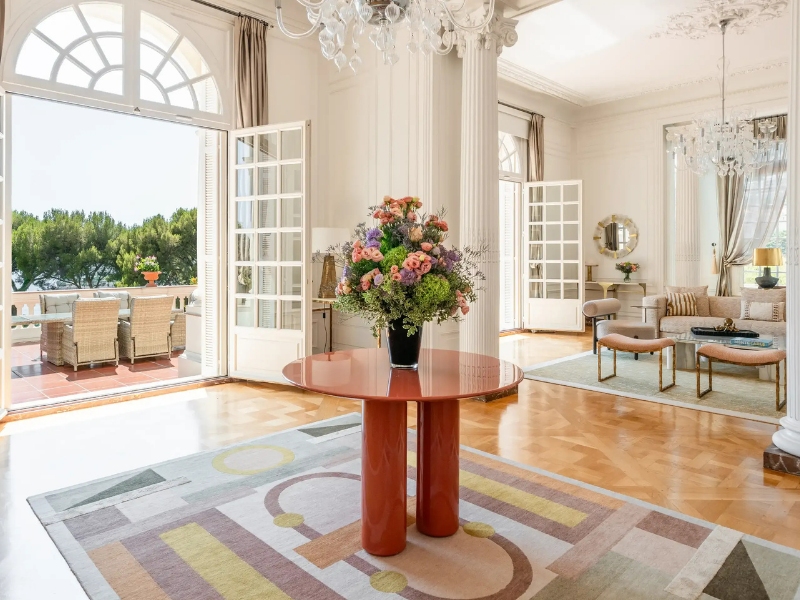
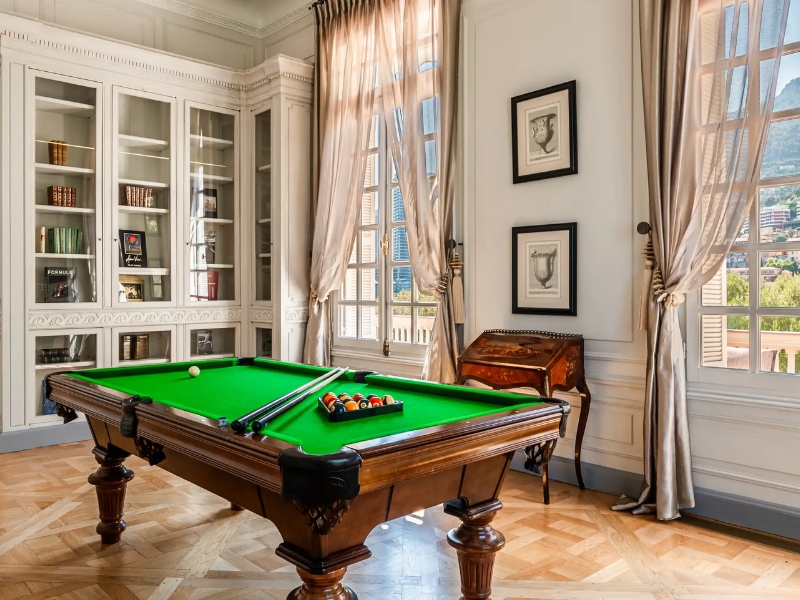
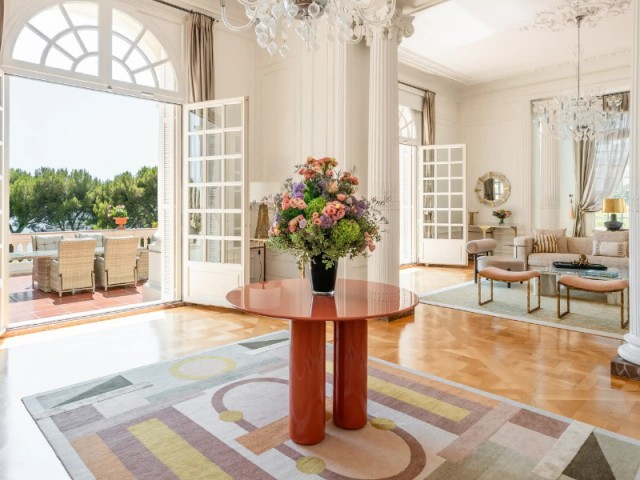
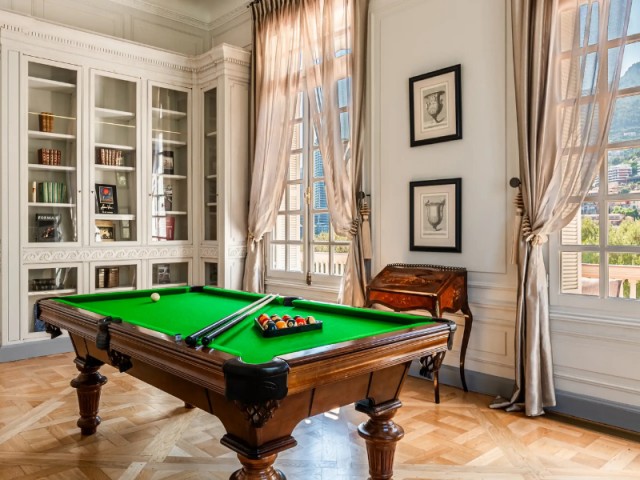
The Belle Époque produced a residential architecture defined by the conviction that craftsmanship and beauty were inseparable from social standing. Villa La Vigie embodies those principles with unusual completeness. The interiors of the approximately 600-square-meter estate, spread across three levels, were built around materials that preceded the floor plan: Versailles oak parquet flooring, original nineteenth-century moldings, Murano crystal chandeliers, marble columns and fireplaces, and high ceilings that allow the Mediterranean light, which Monet himself had identified as singular, to move through the rooms across the day.
When Lagerfeld took the property in the mid-1980s through an arrangement brokered by Princess Caroline of Monaco, he inherited a villa deteriorating after close to forty years of disuse. The SBM offered tenancy on the condition that he finance its full restoration. He accepted, spending a reported $14 million alongside designer Patrick Hourcade to return the villa to its original neoclassical spirit.
The trompe-l'œil paintings in the entrance hall were preserved and restored. A grand staircase modeled on the one at Château de Saint-Cloud was constructed inside. Lagerfeld lived at La Vigie for twelve years. The estate, in the minds of anyone familiar with the Monaco Riviera, remains inseparable from his legacy.
A Living Estate, Not a Preserved Relic
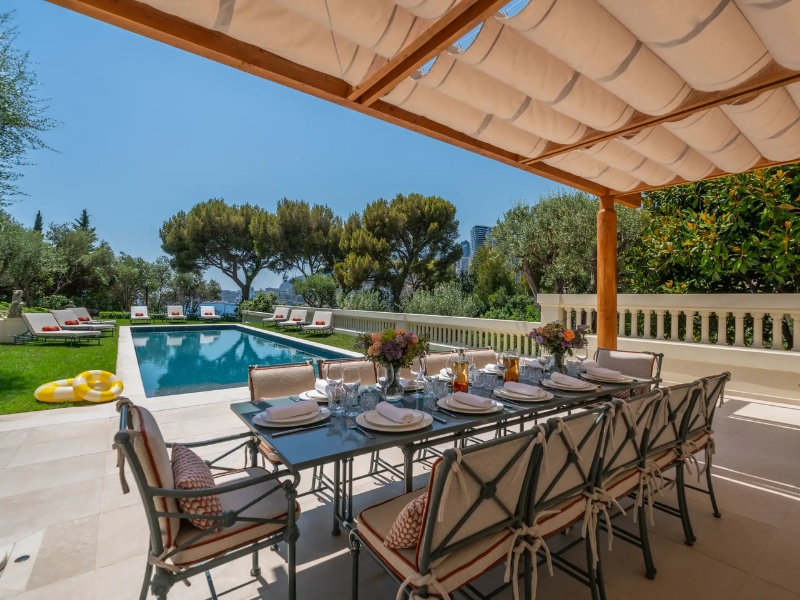
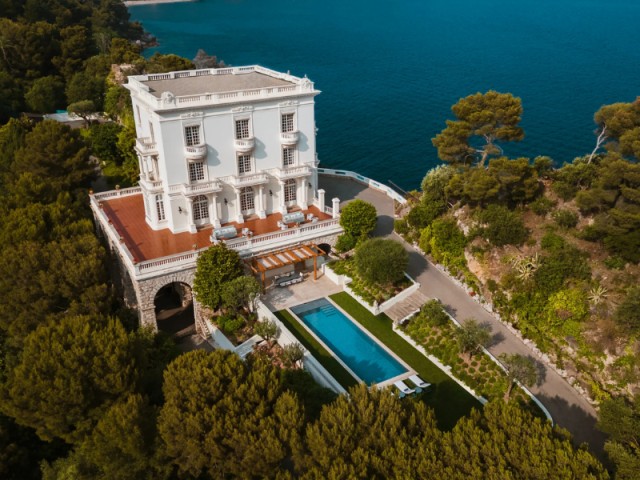
Villa La Vigie remains owned and managed by the Monte-Carlo Société des Bains de Mer. The six-bedroom, five-bathroom configuration across three levels accommodates guests in an environment of total historic immersion. The 237-square-meter terrace delivers views of Monaco, the Mediterranean, and the bay of Roquebrune-Cap-Martin from the moment of arrival.
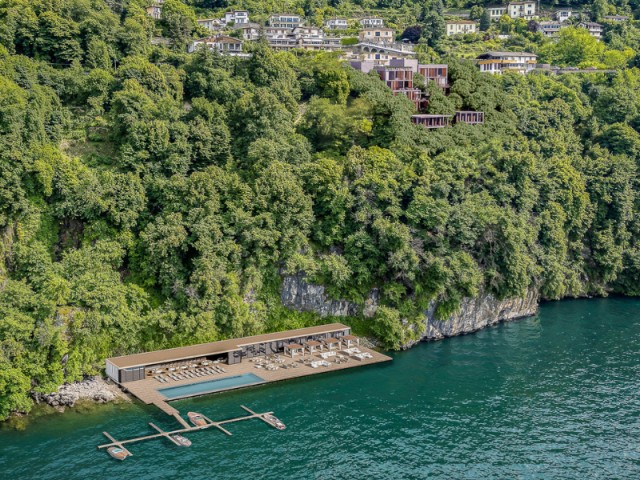
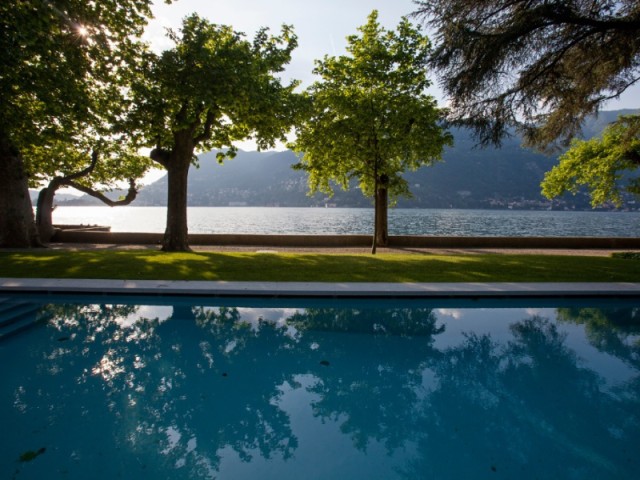
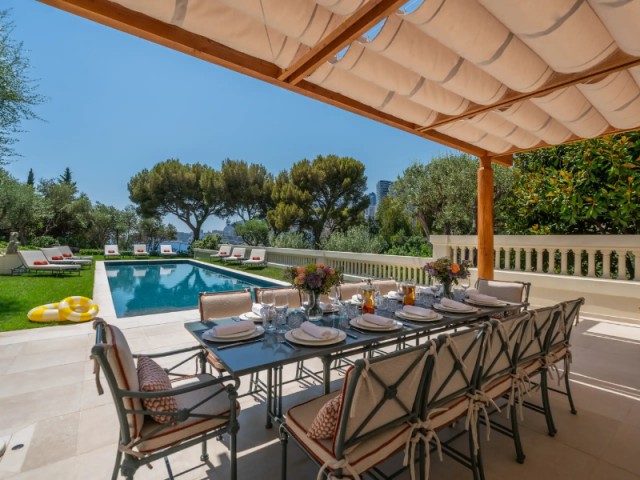
A recent 14-meter heated private pool and pool house update the grounds without disturbing the architectural fabric that defines them. The surrounding gardens are classified as a bird sanctuary by the French League for the Protection of Birds, a designation that reflects both the density of endemic species nesting in the grounds and the deliberate restraint of an ownership model that prioritizes stewardship over spectacle.
The Compounding of Meaning
The architecture of Belle Époque Monaco was produced within a specific window, by craftsmen working within specific traditions, for clients with specific expectations. That window closed over a century ago.
Villa La Vigie is defined by a singular combination of historical milestones. A site that captured Monet's attention before the villa existed, a commission at the peak of the Riviera's Belle Époque moment, a meticulous restoration by one of the twentieth century's most demanding aesthetic minds, and active institutional stewardship that prioritizes preservation over development. It is an estate that exists completely outside ordinary comparisons, anchored entirely by its history and permanence across more than a century.