For high-conviction collectors and global real estate investors, the private island market has long represented the ultimate boundary of exclusivity.
However, the international market is frequently treated to a sharp masterclass in the difference between a property’s perceived valuation and its regulatory reality. The ongoing legal and financial saga of Makri Island, located in the Echinades cluster of the Ionian Sea, serves as a textbook example of this exact phenomenon. What was once promoted globally as a premier €8 million development asset has seen its market profile completely collapse, with an upcoming public auction scheduled for November 13, 2026, featuring a starting price of just €247,000.
The Backstory: The "Crown Jewel" Narrative
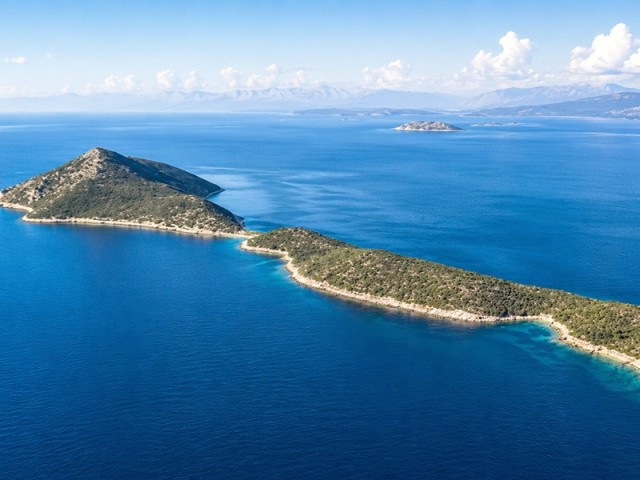
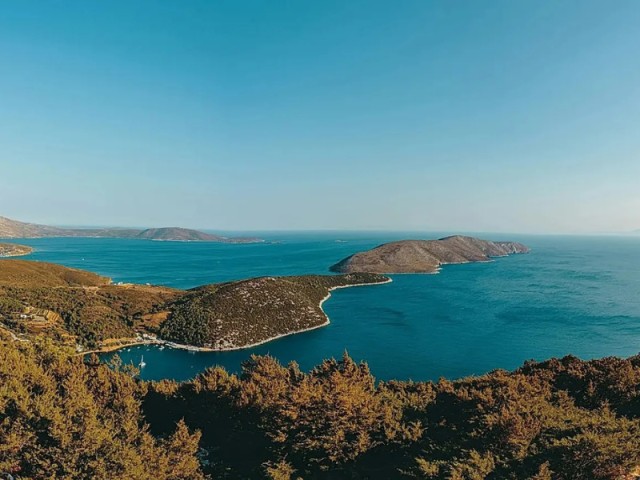
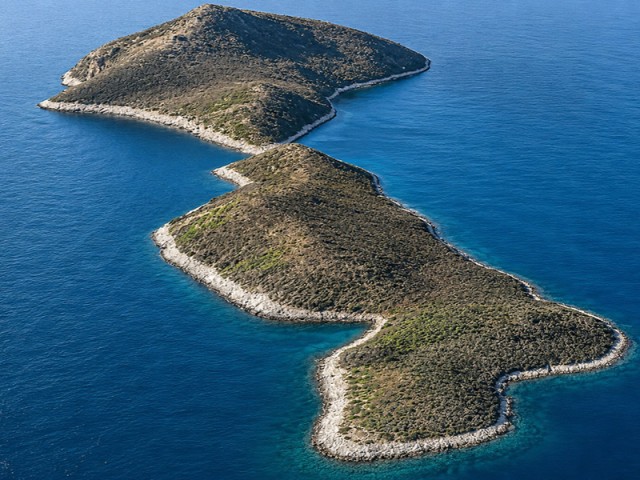
When Makri first entered the international real estate landscape around 2022, the marketing narrative was built entirely on a framework of mature development potential. Promoted across specialized global platforms, the 243-acre uninhabited island was presented as a turnkey asset ready for transformation.
Initial investment briefs claimed that a special zoning regulation was firmly in place, allowing the island to host a 5-star hotel complex complete with premium private villas. Based on an initial 2021 valuation report that assumed the land held no exploitation obstacles, the asset was positioned on the market with a valuation of €8 million, with early public auction starting points structured around €3.8 million.
The Regulatory Reality Check: Environmental and Fiscal Hurdles
The rapid collapse of the island’s valuation, frequently described as a rubber-band price movement, occurred when subsequent technical evaluations brought the site's severe legal and ecological restrictions to light.
- Environmental Protections: Makri was officially classified as private forest land. More importantly, it falls entirely within a Natura 2000 Special Protection Zone and a Site of Community Importance. This strict European ecological protection framework essentially bans large-scale commercial or hospitality infrastructure, limiting permissible use to agriculture, grazing, and minimal, light-impact facilities.
- The Legal and Financial Stack: Beyond the environmental ceiling, the asset is heavily entangled in a multi-layered web of legal liabilities. While the initial seizure that triggered the current auction cycle was for a debt of just €60,000, any prospective buyer inherits a massive backlog of ancient tax claims, creditor actions, and disputed long-term leases that reportedly total over €20 million.
As a result of these uncovered liabilities, a 2022 judicial appeal in Kefalonia attempted to stabilize the auction price at €1.5 million, but the market responded with total silence, forcing the state to slash the starting bid to its current bargain floor.
The Price of Substitution Risk and Replacement Difficulty
The Makri case study underscores an essential truth about the prime asset market: true value is defined by usability, not just raw scarcity. You cannot value an island based on its physical boundaries if those boundaries are legally frozen by international environmental law.
When advising clients on building portfolio resilience, I emphasize that replacement difficulty must always be paired with institutional clearance. An asset with clear restrictions that allow for a transparent look at its future utility, such as the historically anchored Poveglia islands in Venice, holds genuine structural capital. Conversely, an asset like Makri, where the regulatory framework completely blocks the execution of its stated vision, suffers from immense substitution risk. In 2026, savvy investors realize that a bargain entry price is meaningless if the asset comes with a pre-existing patrimonial debt stack and an unbreakable environmental ceiling.