The collection of premier natural history specimens represents the absolute limit of physical scarcity.
Unlike contemporary art or manufactured collectibles, which are subject to shifting creative trends and industrial duplication, fossilized remains from the Late Cretaceous are entirely finite. They are geological documents, shaped by millions of years of pressure and mineralization. When exceptional specimens enter a collection, they introduce an entirely distinct layer of historical value, one defined by scientific significance, evolutionary mastery, and total preservation.
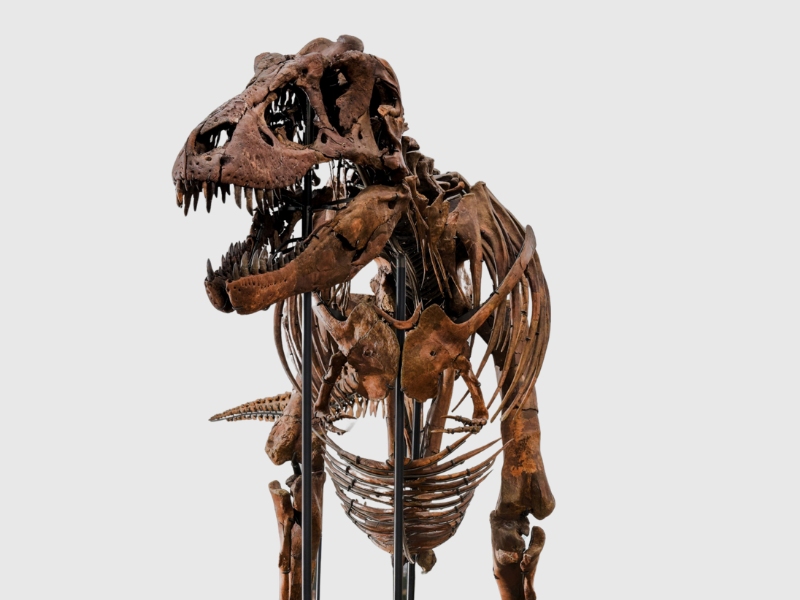
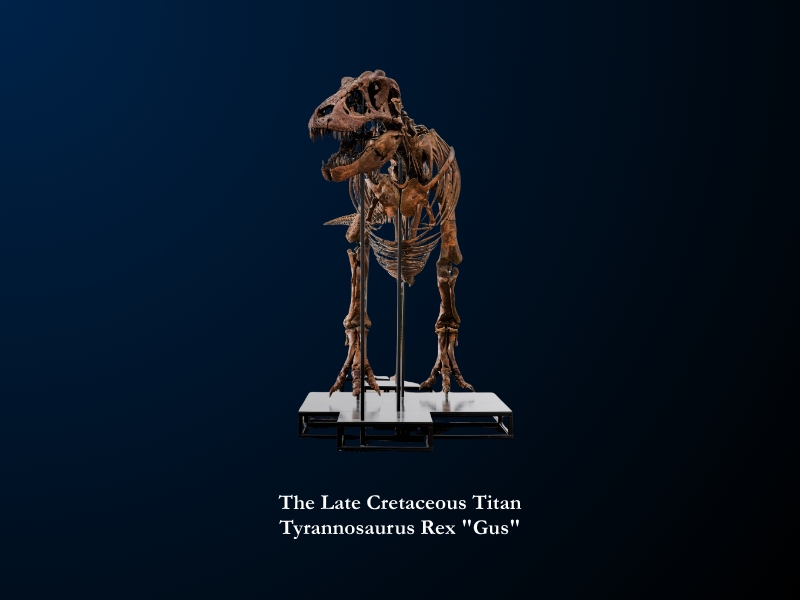
- The Late Cretaceous Titan: Tyrannosaurus Rex "Gus"
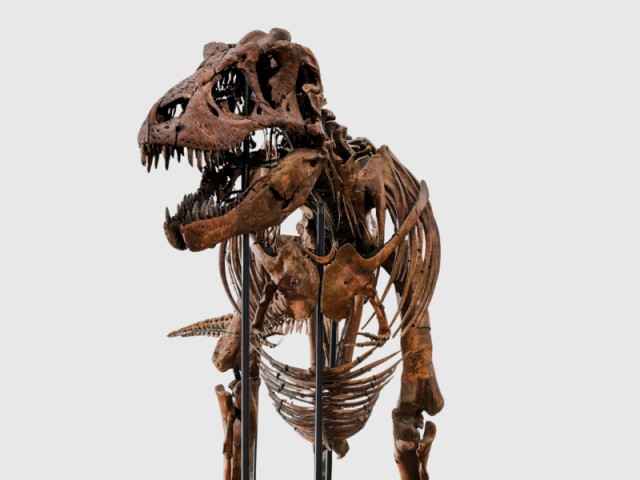
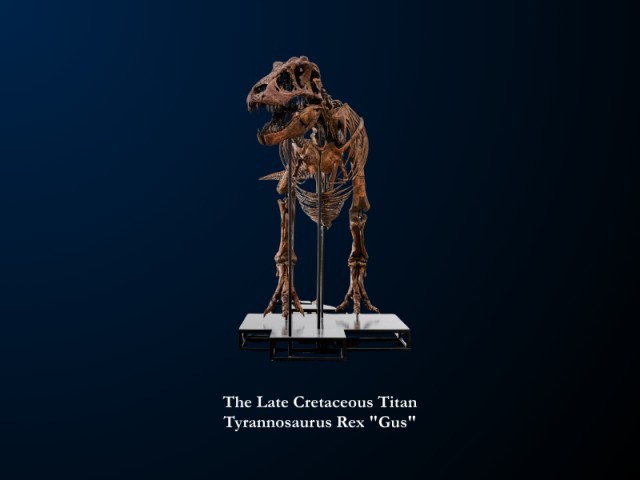
Standing as one of the most complete and formidable examples of its species ever recovered, the fossil skeleton nicknamed "Gus" is a towering symbol of prehistoric dominance. Discovered within the rich deposits of the Hell Creek Formation in Harding County, South Dakota, this 67 million-year-old adult specimen measures approximately 38 feet in length and stands 12.5 feet tall.
What elevates Gus to the upper echelon of global paleontology is the sheer completeness of the preservation:
- Massive Bone Density: Gus is approximately 61 percent complete by bone count, representing an incredible 75 to 80 percent of the animal's total skeletal mass. This includes 183 fossil bone elements and 30 rarely preserved gastralia, or belly ribs.
- The Skull and Pathologies: The beautifully mineralized skull features 82 percent of its original elements. Deep combat bite marks along the jawline, alongside fractured and healed ribs, tell a vivid story of survival and territorial conflict during the late Cretaceous Period.
- Nautical Scale: With a femur length exceeding that of the famous "Stan" specimen, Gus represents a robust, fully matured apex predator of unprecedented scale.
- The Genesis of Life: The Hadrosaurid Nestling Pair
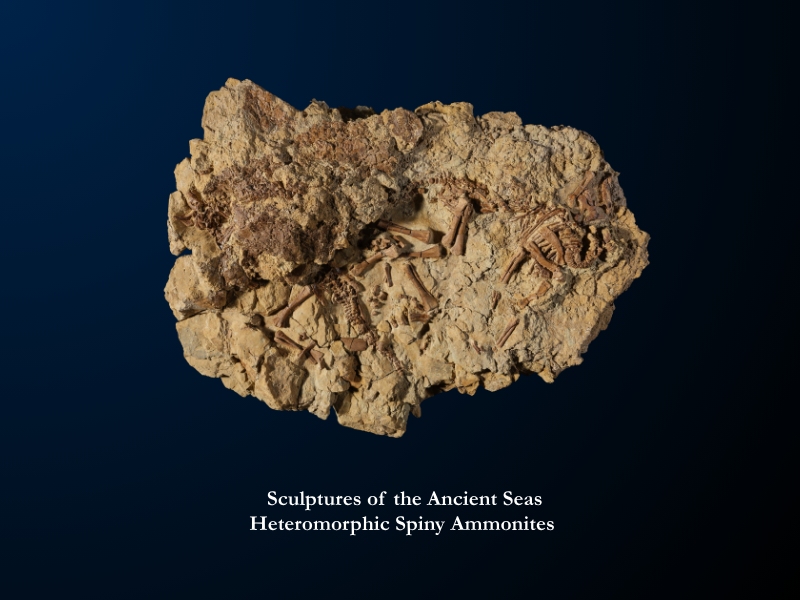
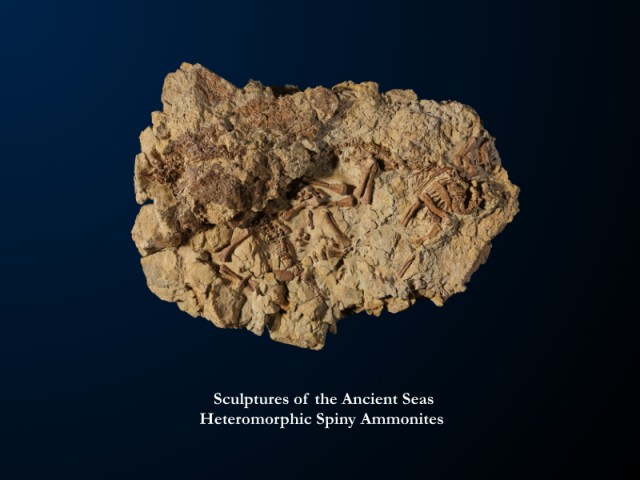
While apex predators command attention through scale, the delicate preservation of prehistoric youth offers an equally rare glimpse into the fossil record. This exceptional matrix block, excavated from the Judith River Formation in Montana, preserves the fossil remains of two neonate hadrosaurid skeletons, likely lambeosaurs, lying in close association with their original eggshell fragments.
Measuring 30.5 by 21.5 inches, this natural sandstone matrix captures the immediate aftermath of birth during the Campanian Stage. The overlapping layers of crushed, dark eggshell on the tiny, fragile bones strongly suggest that this site was once part of an undisturbed communal nest. Because baby dinosaur bones are incredibly soft and prone to rapid decay or scavenging, the preservation of two complete neonates in a single block is a monumental rarity in vertebrate paleontology.
- Sculptures of the Ancient Seas: Heteromorphic Spiny Ammonites
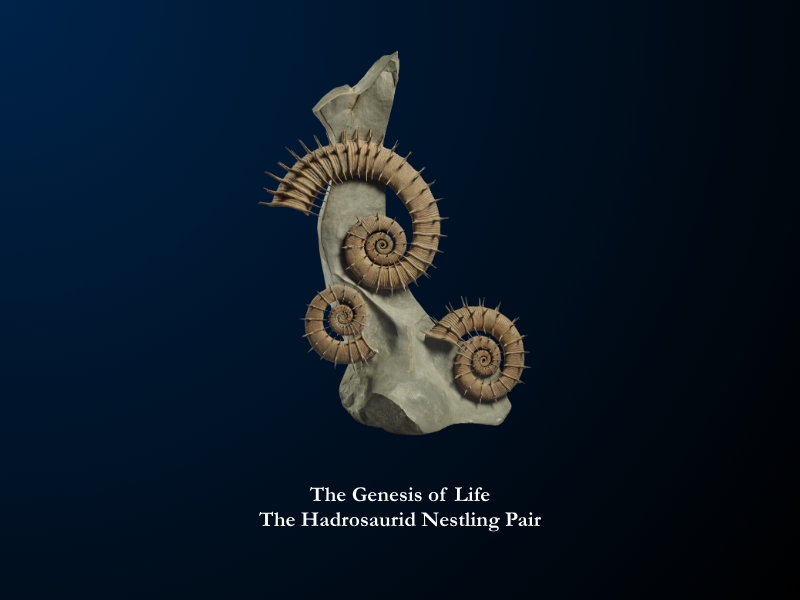
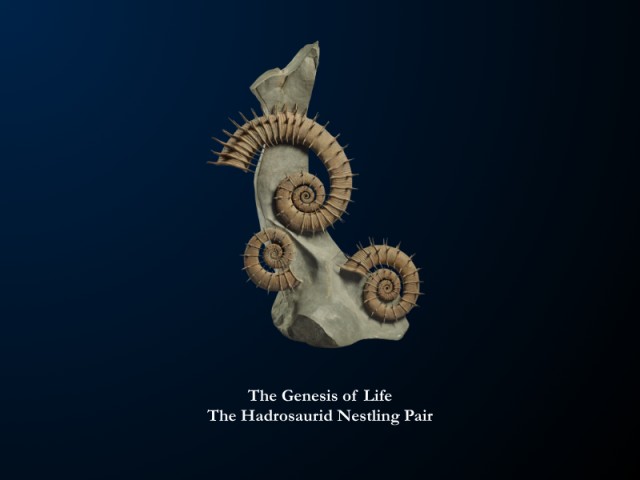
Long before dinosaurs disappeared from the land, complex cephalopods ruled the global oceans. This three-dimensional fossil mural, recovered from the ancient marine deposits of Peyroules, France, showcases a dramatic trio of the spiny heteromorphic ammonite species Crioceratites nolani.
Dating back approximately 130 million years, these marine fossils represent a fascinating evolutionary detour. While typical ammonites grew in tightly coiled, smooth spirals, heteromorphic varieties developed uncoiled, irregular structural forms. The prominent, needle-like defensive spikes radiating from these specimens served as a vital shield against prehistoric predators, transforming this limestone matrix into a dramatic, natural masterpiece of ancient marine architecture.
The Ultimate Protection of Physical History
When we analyze the preservation of value across centuries, natural history masterworks operate in a completely protected class. Unlike classic art movements which can experience shifts in cultural taste, a 67 million-year-old Tyrannosaurus rex or a pristine nest of dinosaur hatchlings exists completely outside the influence of modern trends. Their value is anchored by physical laws and the absolute impossibility of reproduction.
For the forward looking collector, acquiring specimens of this caliber is the ultimate exercise in heritage preservation. These objects are irreplaceable natural monuments. Because geological formations are strictly protected and excavation permits are highly regulated, the global supply of these masterworks is permanently frozen. Holding a piece of the earth's foundational history does not just diversify a portfolio; it secures a physical asset that remains entirely immune to macroeconomic fluctuations.