Italy’s property market has stood through every shock of recent years. One number would test it, but it is a national number.
At the 34th Forum of Scenari Immobiliari, in Rapallo, the group’s president, Mario Breglia, chose an image to describe the Italian property market: a candle in the wind.
The currents are strong, he said. Geopolitical, financial, energy: the wind has not been gentle in recent years. And still the flame is there, steadier than the weather would suggest.
It is a good image because it is honest. A candle is not a fortress. The question worth asking is not whether the flame is lit, but what it would take to put it out.
Context
The figures come from the European Outlook 2027, presented at the Forum. Italian property turnover is forecast to grow 8.7% in 2026 and 9.8% in 2027, reaching €194.1 billion. Across Europe’s five largest markets combined, growth is closer to 5%. In the south of the continent Spain leads and Italy follows, while Germany, France and the United Kingdom advance more slowly despite their size. Over five years, Italian turnover has risen by about a third.
The National Market
Three things hold the flame in place.
The first is scarcity. Prices are expected to rise more than 4% a year. Sales are forecast to reach 840,000 in 2027, up from a low of 710,000 in 2023. Yet of roughly 800,000 annual sales, only about 60,000 are new construction, and those sell out entirely. “The absorption rate for new-build properties is now 100%,” Breglia says, “because the price is fixed.”
The second is capital. Investment in Italian real estate exceeded €7 billion in the first half of 2026, a record and more than 30% above the same period last year.
The third is the breadth of demand: owner-occupiers, investors and renters, together with steady foreign capital. No single buyer holds the market up, so no single buyer can bring it down.
Then comes the test. With rates around 3% today, a move to 4–5% would have no significant effect on transactions. At 8%, sales would fall by around 10%. At 10%, by as much as 30%.
Three Markets under One Name
Here I must add a distinction the figures cannot make. Everything above describes Italy as an aggregate: hundreds of thousands of transactions, across every kind of property and every kind of buyer. It is the right measure for the country. It is not the measure of a lake, and still less of a historic residence.
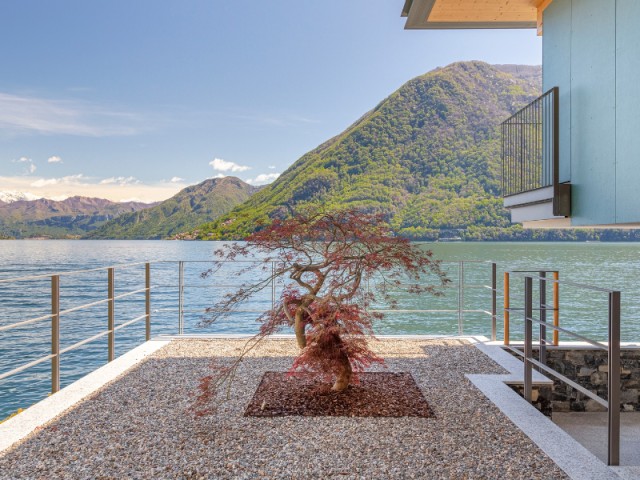
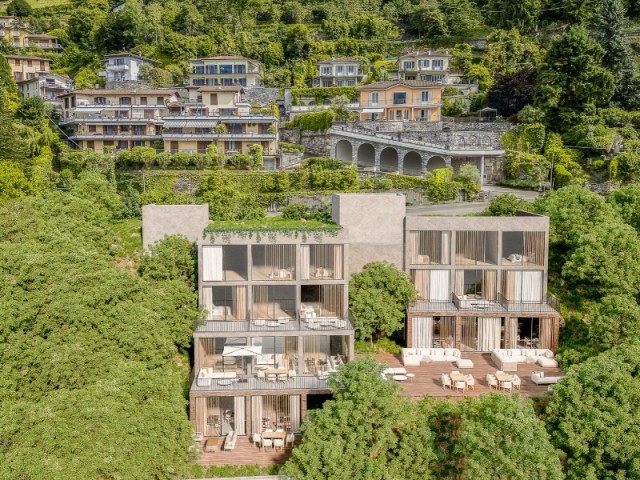
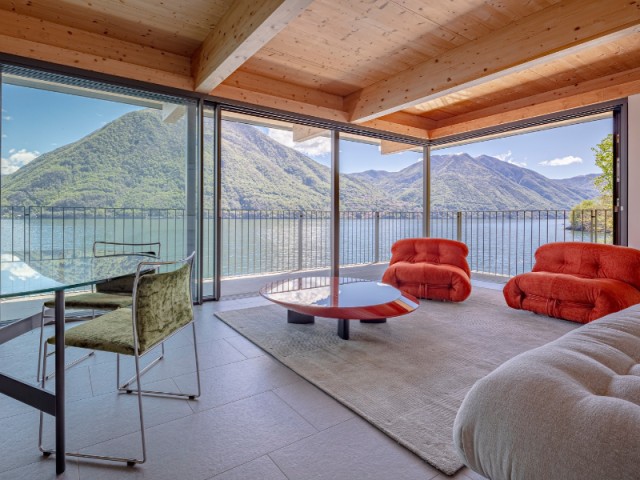
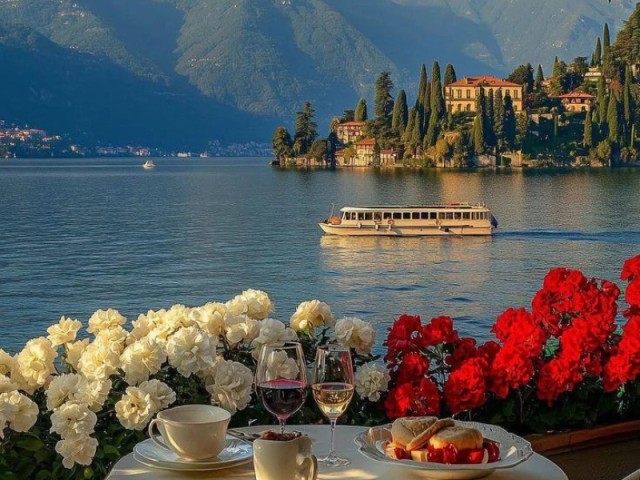
The lake is a market of its own. It is defined by geography before it is defined by price: a shoreline that cannot be extended, a first basin and a west shore that exist only here. You cannot build new lakefront. Where the national market speaks of scarce new construction, the lake has no new construction to be scarce of. Its supply is what already exists, and it changes only when a family decides it should.
Inside the lake there is a further market: the historic residences, the manor villas, the residences of distinction. Here the unit of measure changes again. A villa of 1887 has no equivalent to be compared with. Each has its own history, its own custody, its own price. These properties rarely change hands, and when they do, the reason is often generational more than financial: a succession, a passing of the baton, a family that has kept a property for decades and decides the moment has come.
It would be a mistake to read a national rate sensitivity into such markets. They answer to other forces, and they should be read on their own terms.
The Takeaway
Breglia’s candle describes the country, and it is a sound reading of the country. On the lake there are two more flames, smaller and further from the wind: the market of the shore, and inside it the market of the historic residences. Each burns by its own logic.
For those who think in generations, a rate cycle is weather. What lasts is what cannot be rebuilt.
The Closing
Rates are the one wind worth watching in the national market. On the lake, the wind that matters is of another kind: the decision of a family.