The season opens in the Engadin, a morning's drive above the lake. It opens on narrow skis, and slowly.
In the Engadin, winter does not arrive all at once. It arrives as a line. Someone sets the first track across the valley floor, two parallel grooves and a lane beside them, and for a few days that single line is the whole of the season. Everything else follows it. On the weekend of 14 and 15 November, St. Moritz marks the moment with what it calls the Nordic Kick-Off, and I find myself thinking less about the skiing than about the track: how a season, like a place, is begun by the first person who takes the trouble to lay it down.
The facts are few, and I give them as the organisers do. The St. Moritz Nordic Kick-Off runs on Saturday 14 and Sunday 15 November 2026, from nine in the morning to five in the afternoon, and opens the 2026/27 winter season for cross-country skiing. It is hosted by Suvretta Sports, Engadin Nordic and St. Moritz itself. The programme, as the St. Moritz events listing describes it, includes free introductory lessons, technique demonstrations, competitions and the chance to test the newest Nordic equipment, with an emphasis on sport, on meeting others and on time spent together on the trails. It is a gathering for those who already love the discipline and for those who wish to begin. I have not attended it. What follows is my reading, not a report.
It begins with the discipline itself. Cross-country skiing is the least theatrical way to be in the mountains. There is no lift, no summit, no descent to remember. There is only the valley, the breath and the rhythm of the stride, repeated until it stops being effort and becomes a kind of attention. It is not so far from rowing on the lake at first light: the same repetition, the same quiet, a landscape read at the speed it can be understood.
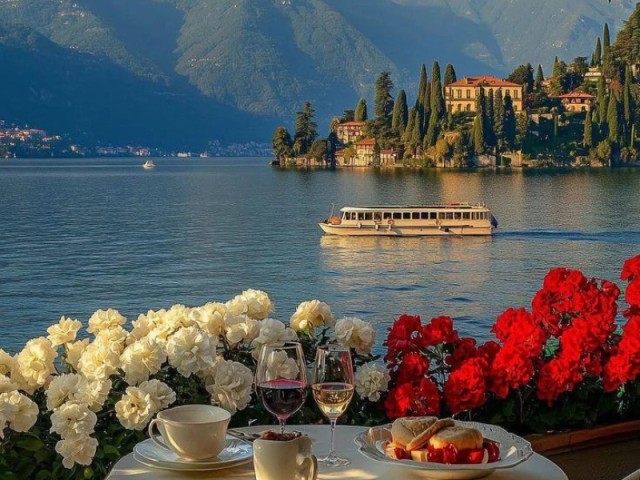
Then comes the geography, and with it the reason the Engadin belongs in the Way of Life Journal. The journal began on the shores of Lake Como, but it was never meant to keep to one lake; it follows the places that are kept rather than consumed, wherever they lie. Drive north to the upper end of the lake, follow the Mera up through Chiavenna and the Val Bregaglia, climb the hairpins of the Maloja Pass, and the valley opens flat and white in front of you. Few people on the lake think of the Engadin as a neighbour. It is one. The Mera, which ends in Lake Como, rises in the Swiss mountains near the pass and runs down the Val Bregaglia; the Inn, which runs through St. Moritz and on towards the Danube, rises in a small lake, the Lägh dal Lunghin, just above Maloja. Above Maloja, water decides which way to go.
Yet proximity is the least of what the two share. A morning’s drive explains how one reaches the other; it does not explain why the same families return to both, or why Way of Life belongs in both. What unites the two markets, and Way of Life with them, is quality that has never needed to announce itself, a history older than any season, and a habit of custody: places held across generations, opened and closed with the year, handed on rather than sold on. That is what Way of Life looks for, on the lake or above it.
And then there is the season, and the habit of opening it. A kick-off is a modest thing: lessons, a few races, new skis to try. Its real work is to gather people at the start, so that a winter is begun together rather than drifted into. The year is kept by its thresholds: the first track in November, the first lunch on a terrace above the water in spring.
Here I must add a distinction the programme cannot make. A Way of Life winter is not only the winter of St. Moritz, measured in events, nor only the quieter one of Lake Como, when shutters stay closed along the west shore and the water turns the colour of slate. It is both, kept together: the white valley for the mornings, the grey water for the evenings, and the pass between them, crossed for as long as there have been people on either side. That is the winter this journal means to follow.
What I take from the Kick-Off is not a date but a gesture. A season, like a place, is not simply entered. It is begun, by someone willing to lay the first track and to invite others to follow it. Custody works the same way. The families who keep a place across generations do not inherit only its rooms; they inherit its rhythms, the openings and closings that give a year its shape. The track will be reset many times before March. What matters is that someone set it first.
I return to the line across the valley floor. To those who will spend this winter between the lake and the mountains, I would say only this: the first track is always the hardest to set, and the one most worth keeping. What will you begin this season, and who will follow it?
For a private conversation, write to me.
Principal, Way of Life