The Modern Masters: Highlights of Dutch Art brings together an exceptional array of works that demonstrate this continuity of craft across centuries.
The Dutch artistic tradition has long been celebrated for its rigorous technical mastery, whether captured in the glowing atmospheric landscapes of the nineteenth century or the mind-bending mathematical tessellations of the twentieth century.
For high-conviction collectors, these works represent far more than visual appeal. They serve as historical landmarks of technique, offering complete insulation from industrial duplication and an enduring lesson in structural preservation.
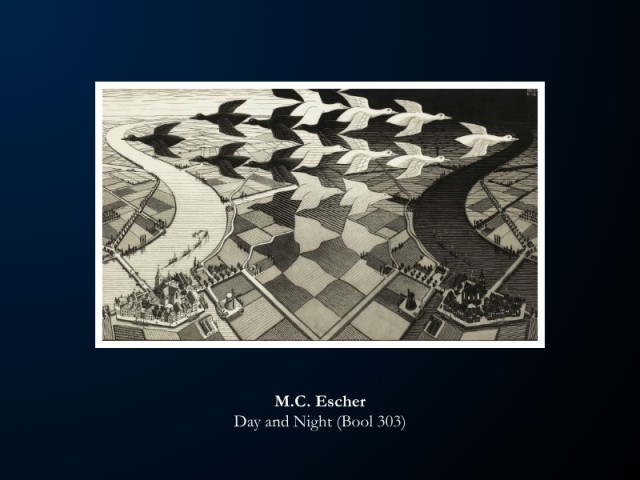
1. Mathematical Genius: M.C. Escher, Day and Night (1938)
M.C. Escher remains one of the most singular figures in twentieth-century graphic art. Day and Night (Bool 303) stands as one of his absolute masterpieces, capturing his obsession with symmetry, reflection, and transformation.
- The Medium and Technique: Executed in 1938, this woodcut is printed in black and grey on delicate, thin laid Japan paper. Hand-signed in pencil by Escher and inscribed eigen druk (printed by the artist's own hand), it carries the highest level of direct artist involvement.
- The Visual Metamorphosis: The composition depicts a Dutch farmland grid where black birds flying into the day transition seamlessly into white birds flying into the night. It is a masterclass in tessellation and dual perspective, transforming flat graphic printmaking into an expansive, infinite plane.
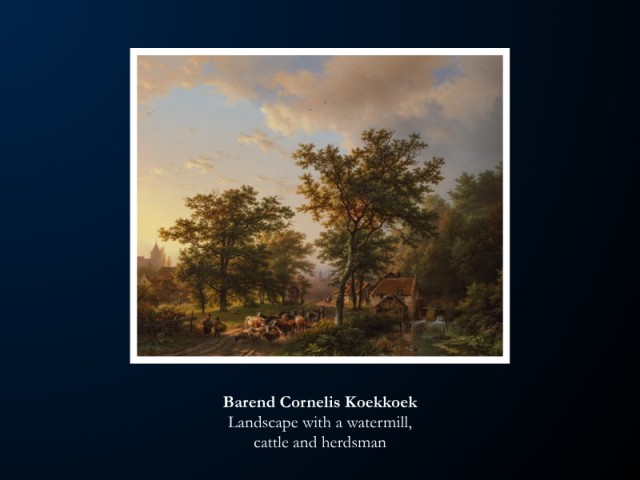
2. Romantic Luminism: Barend Cornelis Koekkoek, Landscape with a watermill, cattle and herdsman (1852)
Known during his lifetime as the "King of Dutch Landscape Painting," Barend Cornelis Koekkoek was the leading figure of Dutch Romanticism. His 1852 oil on panel masterpiece, Landscape with a watermill, cattle and herdsman, captures the serene idealism of the Northern European countryside.
- The Craft and Verification: Measuring 55.9 by 72 cm, the panel is signed and dated lower left on a fence post. In true Koekkoek fashion, the reverse features a signed, handwritten authentication label bearing the artist's personal wax seal, explicitly detailing the subject as a landscape with a watermill under evening sunlight.
- The Atmosphere: Koekkoek’s signature lighting elevates the scene, casting a warm golden glow across the watermill, cattle, and majestic oak trees. His meticulous attention to leaf detail and architectural textures creates a tranquil, timeless sanctuary.
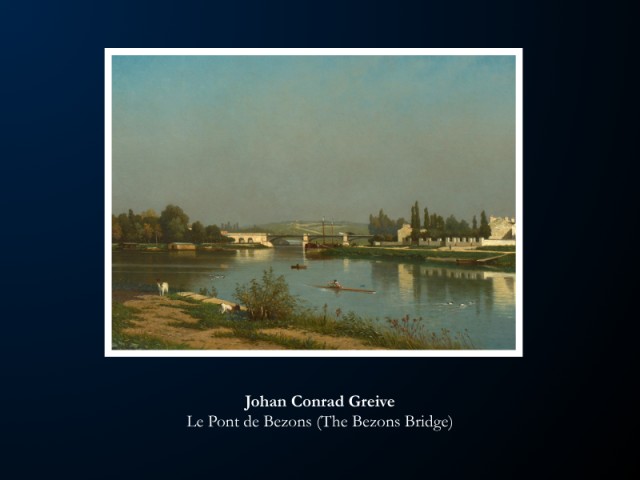
3. The Industrial Dawn: Johan Conrad Greive, Le Pont de Bezons (The Bezons Bridge)
Representing the transition toward modern realism and early impressionistic tendencies, Johan Conrad Greive’s Le Pont de Bezons captures the changing infrastructure of nineteenth-century Europe.
- The Composition: Painted in oil on panel (34 by 46 cm), the work depicts the famous Bezons Bridge spanning the Seine outside Paris. Signed on the lower right and titled on an original label attached to the reverse, the painting bridges Dutch precision with French outdoor light studies.
- Historical Resonance: Greive captures the reflection of light on water alongside the structural ironwork of the bridge, documenting the quiet convergence of traditional river life and modern industrial engineering.
The Structural Value of Master Provenance
When building a resilient collection, the principles governing fine art allocation align closely with prime real estate acquisition: true defensibility relies on scarcity, technical verification, and pristine state of preservation.
An original Escher woodcut personally hand-printed (eigen druk) by the artist, or an 1852 Koekkoek panel complete with its original wax authentication seal, possesses an absolute cap on supply. You cannot recreate a 19th-century Dutch masterwork, nor can you replicate Escher's original hand-pulled impressions from the 1930s.
For collectors seeking long-term value, items with documented artist labels, clean structural preservation, and institutional significance operate outside volatile market cycles. Securing masterworks backed by unquestioned authenticity ensures your capital remains anchored in permanent, unrepeatable history.