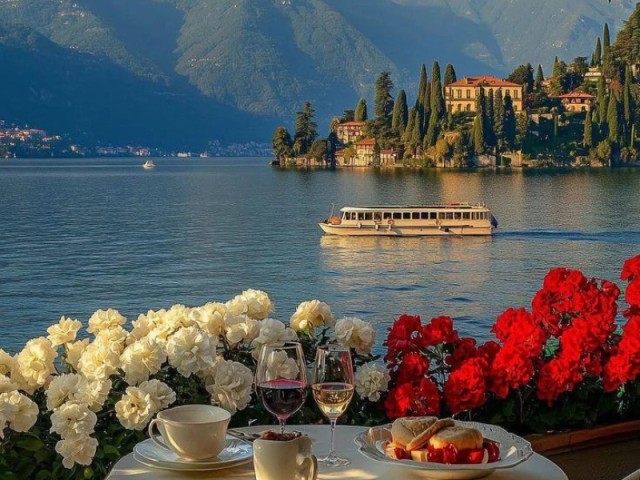
I went to New York expecting to remember the people, and came home remembering a ceiling.
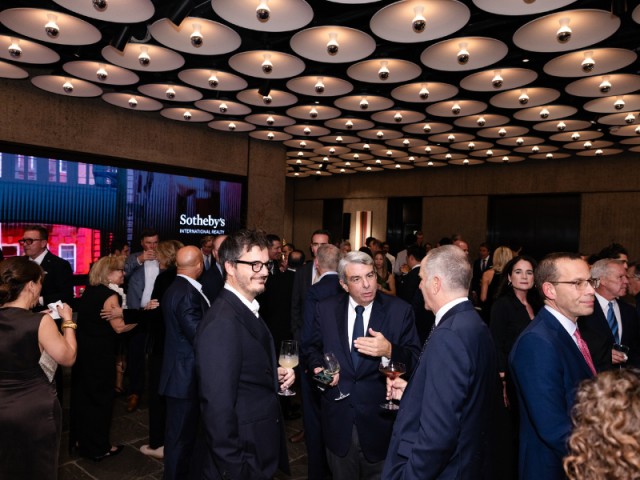
Look up. That is the first thing the Breuer Building asks of you. The ceiling of the reception room is covered with white discs, hundreds of them, each with a single bulb at its centre, so that the whole room seems lit by a field of small moons. Beneath it, on a slate floor, colleagues from four continents were holding a glass and speaking all at once.
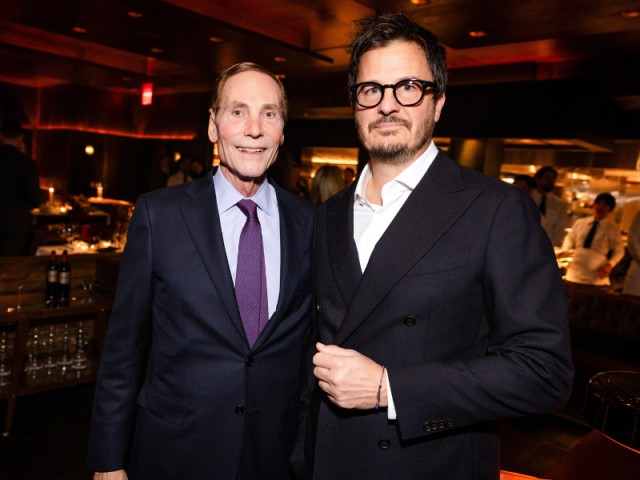
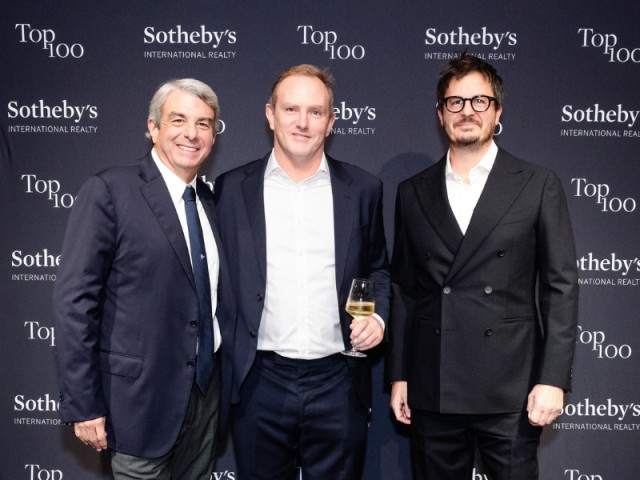
I stood among them for the first time. On the evening of 12 November I attended the Top 100 Advisors and Teams evening of the Sotheby's International Realty network, after years in which my commitments had kept me away. I had imagined many things about that evening. I had not imagined that what I would remember best was a ceiling.
Why it mattered
The invitation said it plainly: you stand among the Top 100 advisors and teams in our brand worldwide. Of all the advisors and teams in the network, across every country, one hundred were asked to come. And that year the network itself turned fifty.
I will say the rest plainly too, because it is true and because it is not something I am used to saying. It was a pleasure to be there, and a quiet satisfaction.
This is a profession in which one works for years without noise, one property at a time. The occasions when colleagues from around the world gather in a single room are rare. Earlier editions I had missed, not by choice but because of commitments that could not be moved. Being at the table at last did not feel like an award. It felt like finally sitting down at a table I had been working beside for a long time.
The building
From Madison Avenue the Breuer Building does not invite you in. It shows a wall of grey stone, and set into it, at odd angles, a few deep windows shaped like irregular trapezoids. A building that looks like this is not trying to be liked. It is trying to last.
The address is 945 Madison Avenue. Marcel Breuer designed it in 1966. It opened as the Whitney, later became the Met Breuer, then the Frick, and today it is the new home and global headquarters of Sotheby's. Four institutions, four custodians, and the building has kept its character through all of them. The invitation added a detail I liked: the headquarters stands one block from where the company was founded in 1976. Fifty years on, it has come back to within a few steps of its beginning.
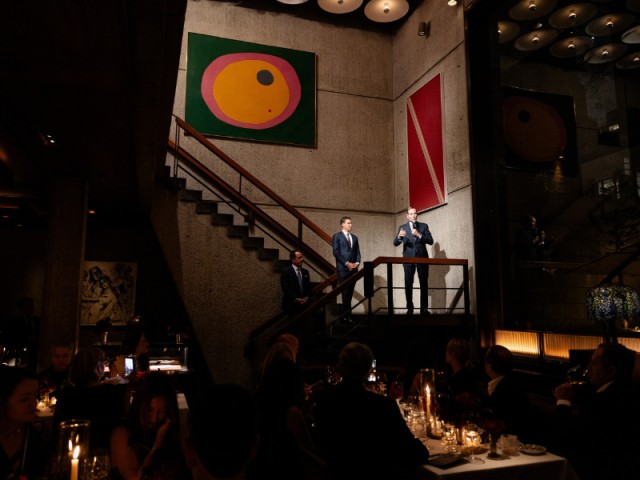
It is brutalist architecture, and brutalism has a reputation for severity. Inside, the severity turns out to be only the structure. The walls are rough, heavy stone. The floor is slate. A concrete staircase with a wooden handrail climbs through the dining room to a landing, its steps cut one by one. And yet nothing feels heavy. The weight is there and the warmth is there, and they do not argue.
Around the guests stood the works to be offered at auction that week, among them the large Calder at the entrance. They will change hands within days. The building will not. That, I realised, is the quiet difference between a work and a place: one passes from custodian to custodian, the other is the thing that holds them all.
I have spent a long time among old walls on Lake Como, and I recognised something here. A good building does not belong to the people who occupy it. It lends itself to them. Each custodian adds something and takes nothing away, and the building goes on being itself.
The aperitif
We began in the reception room, under the discs of light. The room was full, and it was loud in the way a room is when people are glad to see one another.
I met colleagues from America, Australia, Europe and Asia. What struck me first was how many of them already know Lake Como. Many come every year. Several asked me for advice: where to stay, what to see, whom to trust. It was stimulating, and it was rewarding, to watch them understand, in a room in Manhattan, the passion this lake inspires. It is not a passion that can be explained to someone who has not stood on its shore. They did not need it explained.
Marcel
Then we moved to Marcel, the building's restaurant, designed by the New York studio Roman and Williams. Part of the space is landmarked and part is not, and the designers joined the two through the materials Breuer himself used: bronze, walnut and granite, with silver and glass added. In the part that could be changed, the walls and ceilings are lined in walnut, and in the evening they glow the colour of embers.
One detail stayed with me. Early in the work the designers found, in an archive, Breuer's drawings for custom hardware, made for a model residence he built in the MoMA garden in 1949 and never produced. For Marcel, the pieces were finally made. What was drawn was not lost. It waited, and one day it was completed. I thought that this is exactly what custody means.
The room was already set. White cloths, candles under glass, dark red flowers, hand-painted plates in orange and blue. At each place lay a menu in a navy cover, and on it, the name of the guest. Every table carried its number. Through the tall glass wall you could see a small garden, and a tree strung with tiny lights, and, reflected in the glass, the framed work on the opposite wall.
That work hung high on a tall concrete wall: a snowy mountain, and across it two words in clean capitals, "Wall Rockets", in the manner of Ed Ruscha. A mountain and a word. I live beside the Alps and a lake, and I smiled.
The table
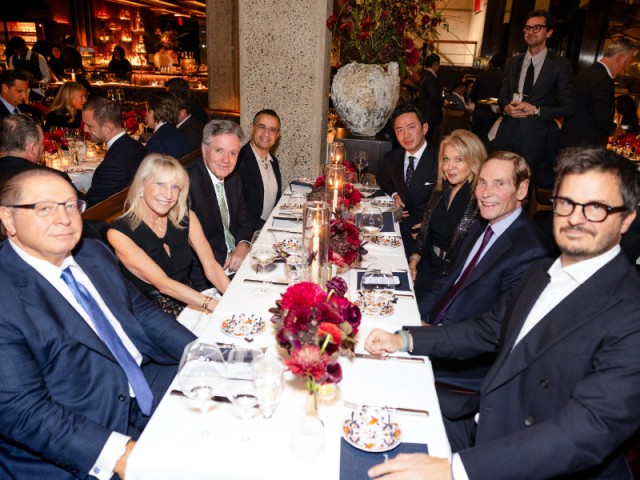
Dinner was a table of eight, long and narrow, under the walnut ceiling.
At my right sat Philip White, Executive Chairman of Sotheby's International Realty, who has served in nearly every role in the network since the early 1980s. I considered it an honour, and I did not take it lightly. I asked him what he would advise someone who wants to grow. Always look ahead, he said, with the intention of growing and improving, and never stop at the single thing in front of you.
Opposite me was Kathy Korte, Philip White's wife, who came to New York after several moves, began at the company in 1984 as an administrative assistant, rose through its ranks, and in 2006 became its president and chief executive. She learned the business from the inside, and helped build the brand from the corporate side. She told me that, watching from the inside, she had seen a pattern: people who succeed share certain traits, and perseverance, the will to keep going, is one of them.
Also at the table was Nikki Field, who has been with Sotheby's International Realty since 1998 and founded the Field Team in Manhattan. I asked her what she considers her secret. The team, she said: making the work, the deal and the satisfaction shared by everyone improves the results and the way we work. I would add that it also improves the way we live.
The rest of the table was just as varied: John Cregan from the Palm Beach office and Joseph Barbieri from Greenwich, a colleague from Japan, and the person who guides the brand's cultural growth. One of them told me that his assistant had become wealthy through the practice they had built together. I liked that story more than any figure I heard that night. It measures success by what happens to the people around you.
What I remember most is the register. Nobody at that table was in a hurry. People who have spent decades in this work spoke slowly and listened more than they spoke.
The speeches
The speeches were given from the landing of the staircase, with two large canvases behind the speakers, one green with a round orange form, one red crossed by a thin diagonal band of colour. There were three, and they were brief.
Philip White spoke first. He returned, before the whole room, to what he had told me at the table: always look ahead, with the intention of growing, and never stop at the single thing in front of you. Then he raised a toast. It was a moving moment.
Then Robert Reffkin, co-founder and chief executive of Compass, speaking for the first time at this gathering, told us that the teams he had wanted to acquire had said no, because they believe in the brand, and that it had made him reflect. I thought it was a remarkable thing to say in public, and a generous one. A great part of the company's work was in that room.
Last, Mark McLaughlin, appointed President and CEO of Sotheby's International Realty effective 1 November, also at his first, spoke and was open to everyone who came to him afterwards. He arrived at Sotheby's after two earlier attempts to work with it had failed. Persistence of that kind says something about a person.
The next day
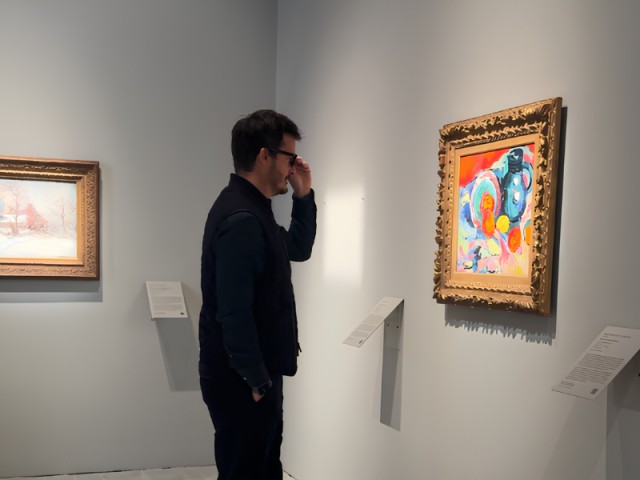
The next day I met many of the same colleagues again, at a private visit to the exhibitions, among works that were soon to pass to new custodians. It was the same conversation, continued in other rooms. Those works deserve a story of their own, and I will tell it in the next one.
What I take home
What I heard at that table, from every voice, was the same, and it is not the language of results. They spoke of the team. They spoke of successes shared. They spoke of trust built over time, patiently, with the same people. Building is the quality they named above every other.
And none of them described arriving at the top as an end. For them it is the moment in which the next climb becomes visible. I had not expected to hear that, and I think it is the truest thing I heard in New York.
I have always wanted to grow, and I know I have come a long way, with a longer way still ahead, each stretch a little better than the last. I have always worked quietly; colleagues tease me that I am a secret agent. For many years I have been the network's leading advisor in Italy, with record transactions in the Italian market, yet very few people know it. So finding myself in that room, among people I had followed for years as legends of this profession, and seated at a table that, among many remarkable ones, felt the most remarkable of all, was something I will not forget.
I think of the ceiling. Each disc carries a single bulb, and no bulb lights the room alone. Together they make one light, even and warm, in which people can speak slowly. That is how they described their work to me, and it is how I would like to describe mine.
I thought of the building around me. No single custodian ever finished it. It was held, handed on, and held again, and what persisted was the form and the care taken of it. The same is true of a villa on Lake Como. It outlives those who live in it, and the only honest way to work with such a property is to leave it a little better protected than one found it. I try to protect what cannot be replaced, and that evening confirmed, in a room very far from the lake, that I am not the only one who works this way.
That is also where I see my own growth. On a personal level, the evening gave me a deep satisfaction. On a professional level, it showed me how much it matters to sit with the best, to share opinions, and to discover how closely aligned we are. Above all, it opened a door to growing further. I imagine many things ahead.
Back to the lake
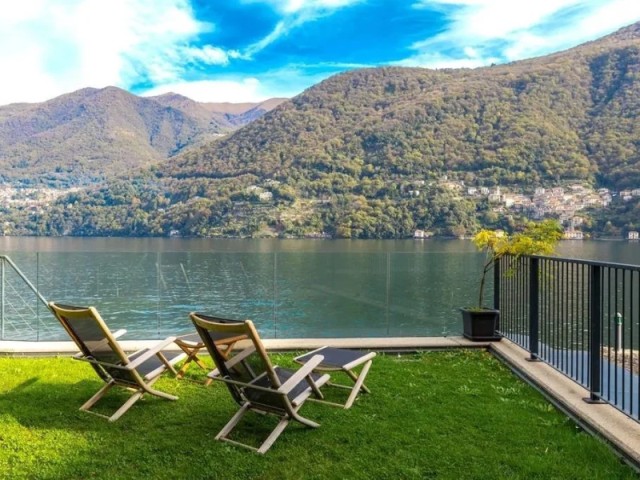
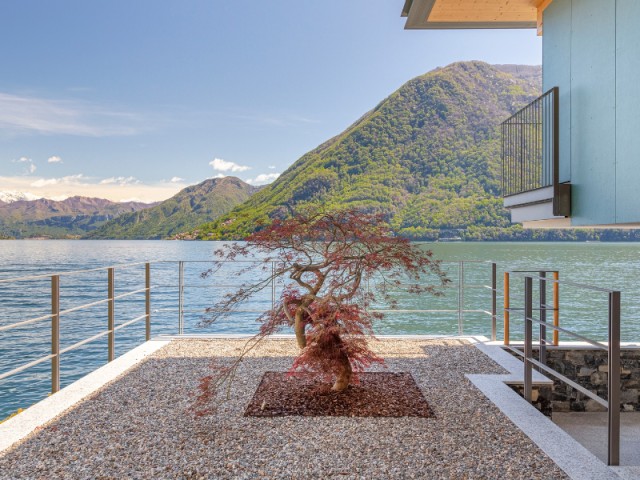
These people come back to Como every year. We meet again somewhere in the world, and next summer here, by the water. I am grateful to the people at that table, and to everyone who made those two days what they were.