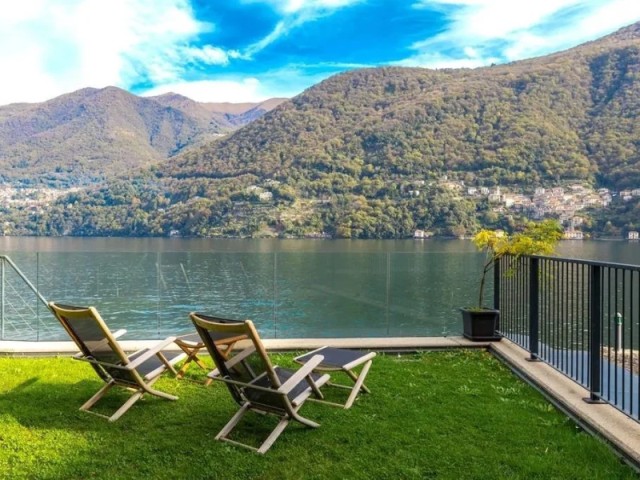
On the terraces above the water, the year is measured in olives. What a family presses in November tells you what it has kept.
The new oil comes out of the press cloudy and almost too green, with a bitterness that catches at the back of the throat. Wherever olives are pressed, it is the custom to pour the first of it over bread the same evening. It is the work of a year on one slope, made visible in a single glass: the pruning in spring, the walls repaired before the rains, the nets spread under the trees in autumn, the ladders, the crates carried down by hand. The oil is only the last page of that work.
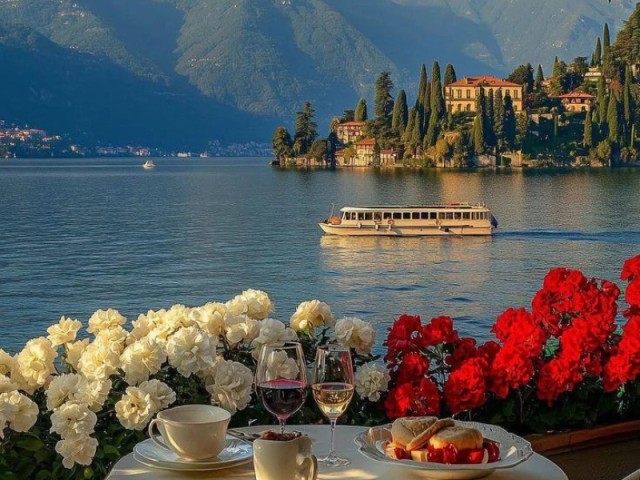
Olives on Lake Como surprise people who know the lake only from August. They should not grow this far north, and yet they have been cultivated on these slopes since at least the Middle Ages, sheltered by a lake that softens the winter. Abbeys and powerful families once contested these groves, and a village on the Lecco branch still carries the tree in its name: Oliveto Lario. The oil carries its own name too: Lario, one of the geographical mentions of the DOP Laghi Lombardi, recognised by the European Union in 1997. To bear it, at least four-fifths of the oil must come from three varieties, Frantoio, Casaliva and Leccino. The olives are picked from the tree, largely by hand and generally in November. The yields are small, and much of what is pressed never leaves the families who grew it.
For much of the last century the terraces went the other way. Families left the slopes for the valley floor and the cities, and the dry-stone walls that had held the soil for generations began to slip. The groves went wild; bramble climbed into the branches, and the walls gave way one stone at a time. On the paths above the lake you can still find them: thick old trunks standing among the chestnuts, the line of a terrace under the leaves.
The return has been slower. From the early 2000s the Gaiatto family began acquiring abandoned groves between Varenna and Perledo, about eight hectares in all, and since 2005 they have planted more than 1,300 trees of Frantoio, Leccino, Bianchera, Pendolino and Maurino. Each parcel is picked and pressed on its own, so that the oil keeps the character of the ground it came from. In Perledo, the growers of the Olivicoltori Lago di Como cooperative have already bottled the first oil of the 2026-27 season.
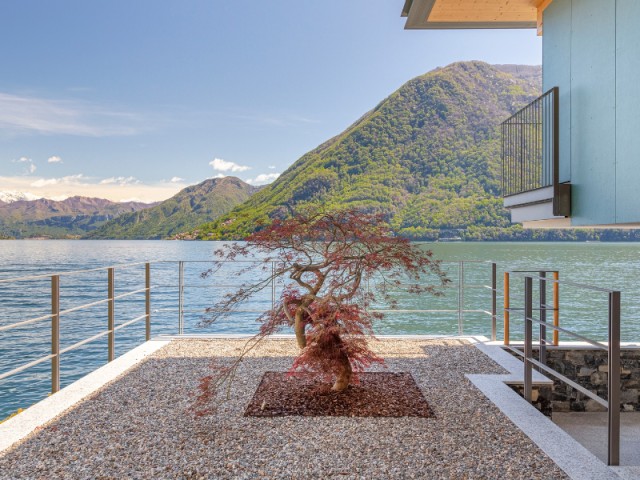
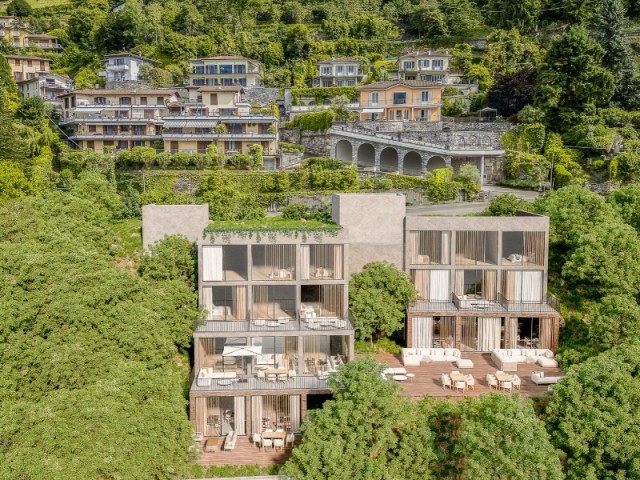
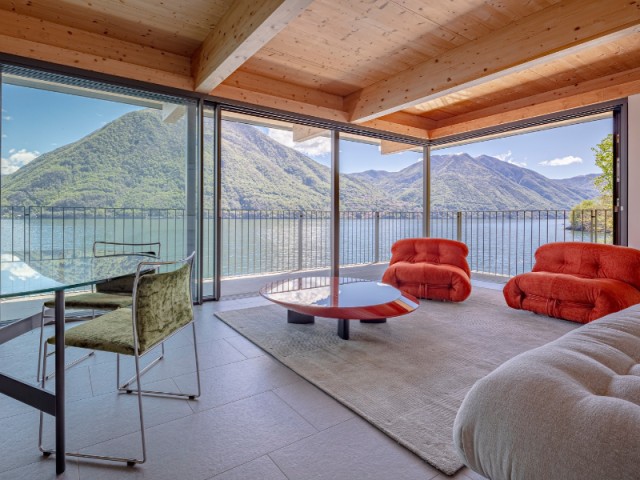
I come to a property at the end of this story, never at its beginning. A villa with old terraces carries that history, and the terraces tell it plainly. You see whether the walls have been kept, whether the trees have been pruned by someone who knew what they were doing, whether there is a neighbour or a cooperative press nearby that has been taking the fruit for twenty years. You see whether the place has been in custody or only in possession.
A valuation can describe the villa. It has little to say about the slope behind it. The terraces are measured in another unit: the years someone has been willing to give them.
What I take from the harvest is a lesson about time. An olive tree planted today gives little for years, and it will almost certainly outlive the person who planted it. Whoever sets it in the ground is working for the next hands. It is the oldest definition of custody I know. A family that takes on such a place takes on that promise as well: a slope that will ask for care every spring and give back, every November, a few litres of green oil.
If you come to the lake this month, leave a morning free. Walk a terrace above Varenna, find a press in one of the villages, taste the oil while it is still cloudy. Then look at the trees and ask who planted them, and for whom.
For a private conversation, write to me.
Principal, Way of Life