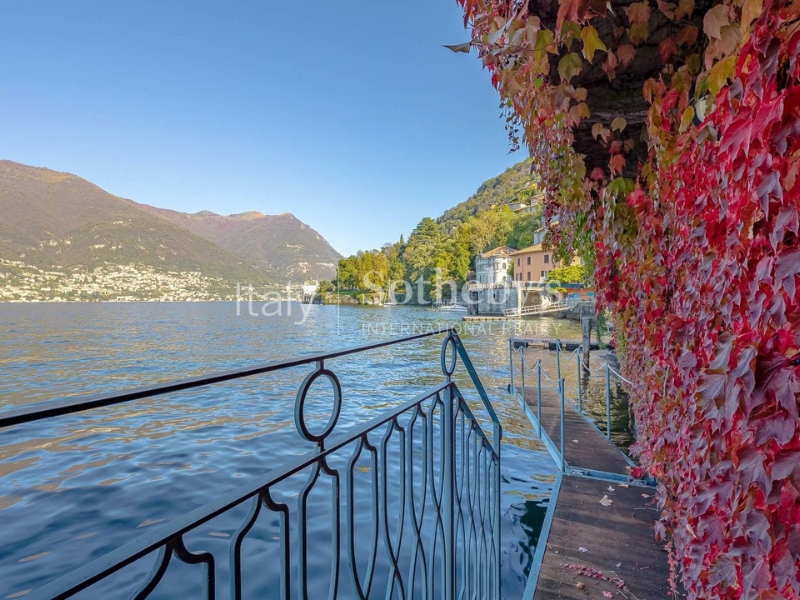
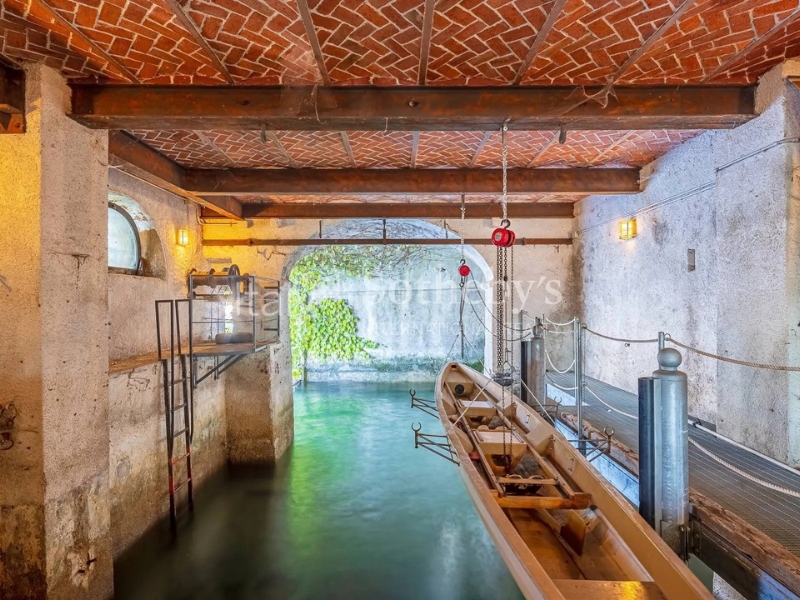
On the eastern shore of the first basin there is a building whose front door is, in a sense, underwater.
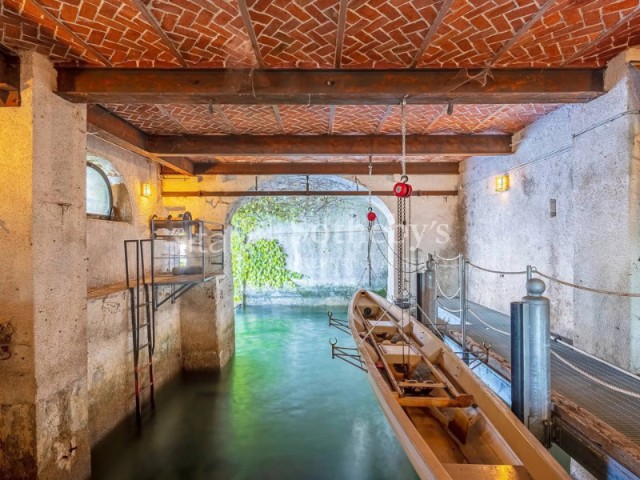
You reach the lowest room not from a corridor but from the lake itself: a boat glides into the boathouse, the light changes from open sky to shade, and the water becomes still. This is where the villa starts. Everything else was added later, upward, towards the garden.
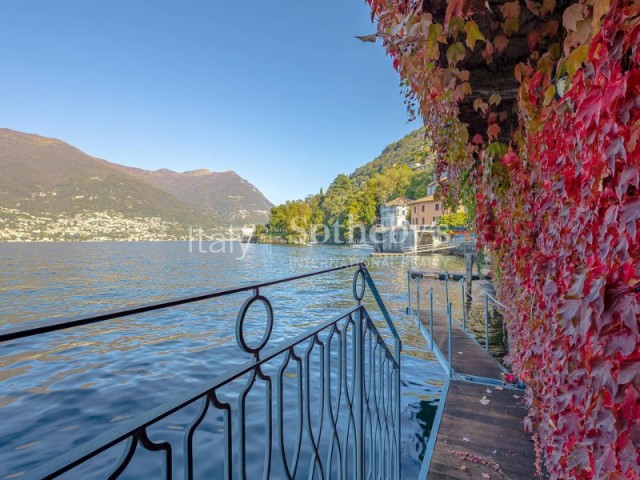
Blevio is one of the least announced villages of Lake Como. Its shoreline was for centuries a working edge: landings, boathouses, walls that held back the water and the hillside at the same time. The great families of Como and Milan built their villas above it, and at the water's line they built the structures that made the lake usable, the darsene, the covered docks where boats were kept dry through winter and brought out in spring.
Villa Serenità was one of these. It was built at the end of the nineteenth century as a boathouse, the boathouse of Villa Riva, and it remained a building on the shore for most of its life. Only later was it transformed into a residence. Like much of the lake's edge, the land it stands on belongs to the State; the villa is held under a surface right, as are many historic structures at the water's line, a detail of custody worth understanding before anything else, and one I prefer to explain in person.
A full restoration, completed roughly ten years ago, took the building in the right direction: it kept the boathouse as the foundation of the story and added the comforts a family now expects — underfloor heating, air conditioning, a discreet security system — without disguising what the building was.
The villa is not large by the standards of the lake. About three hundred square metres, on three levels, and each level has a different relationship with the water.
At the bottom, the dock level. A spacious room opens directly onto the boathouse and the pier. It is the room for evenings that end late and for mornings that begin on the water; you step from a sofa to a boat in a dozen paces.
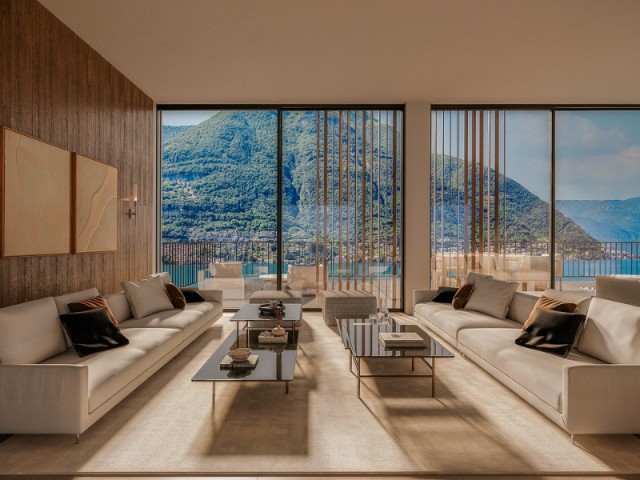
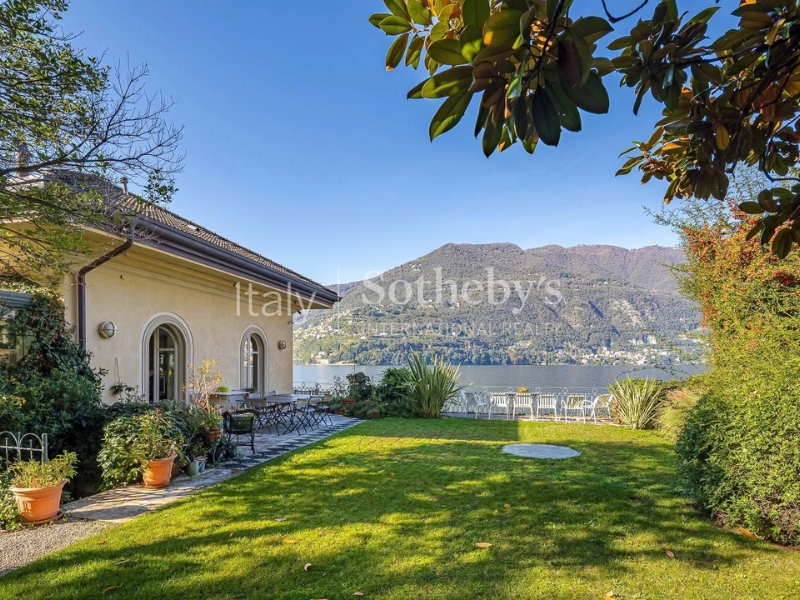
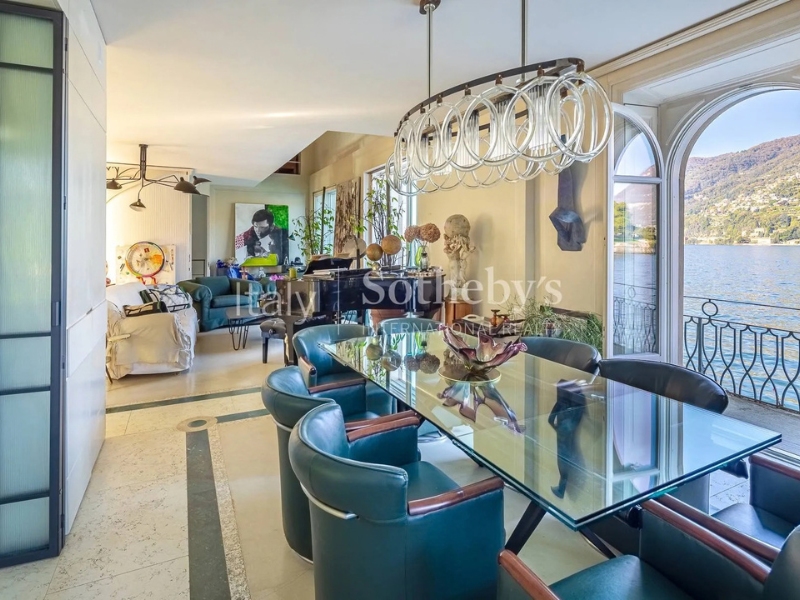
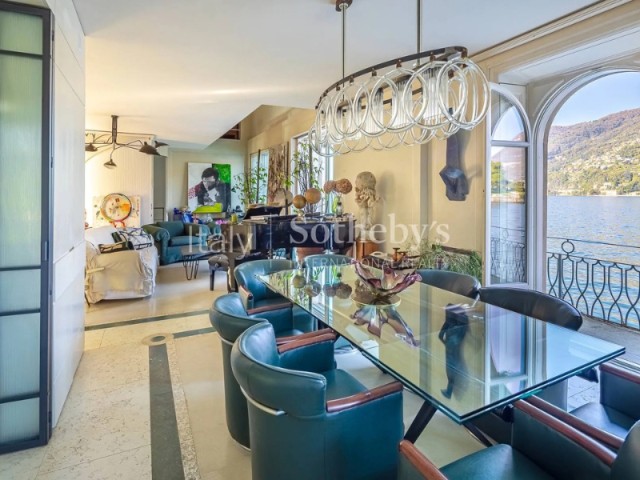
On the ground floor, the life of the villa. An entrance opens into a living room lit by tall windows facing the lake, anchored by a fireplace. The dining room follows, and then an industrial-style kitchen set in a conservatory surrounded by green. The principal bedroom is on this floor too, with its own bathroom and a door straight into the garden.
A spiral staircase leads to the upper floor: two further bedrooms, each with its bathroom, a small study and a laundry.
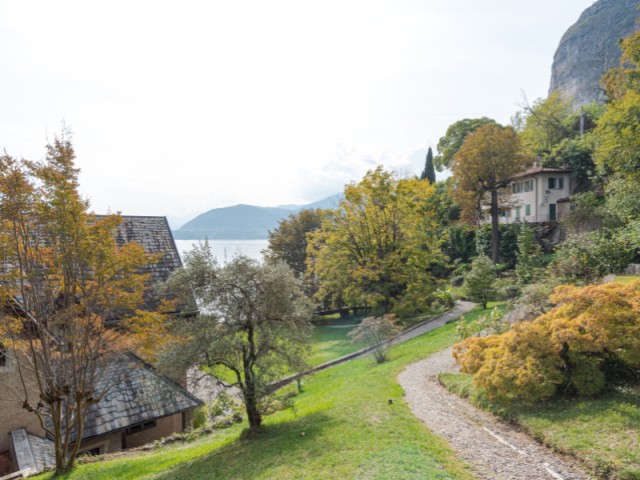
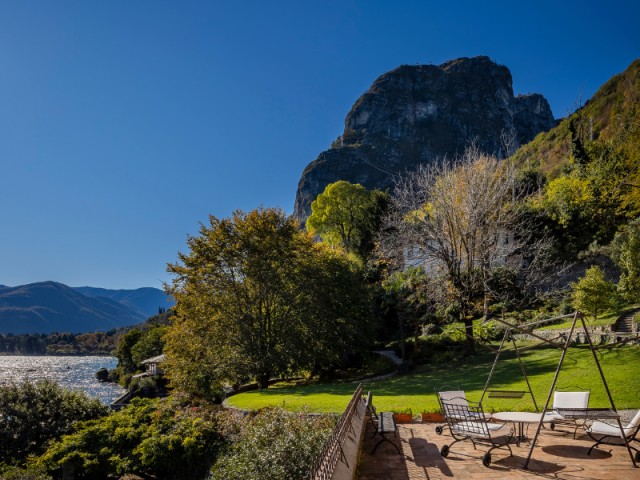
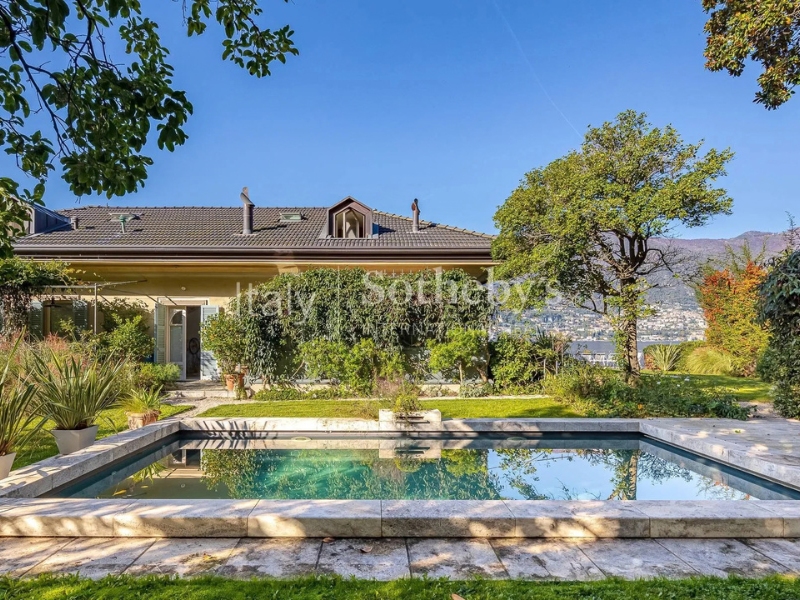
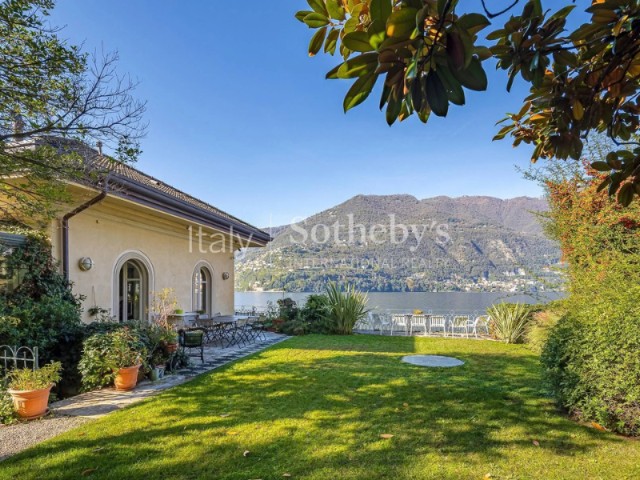
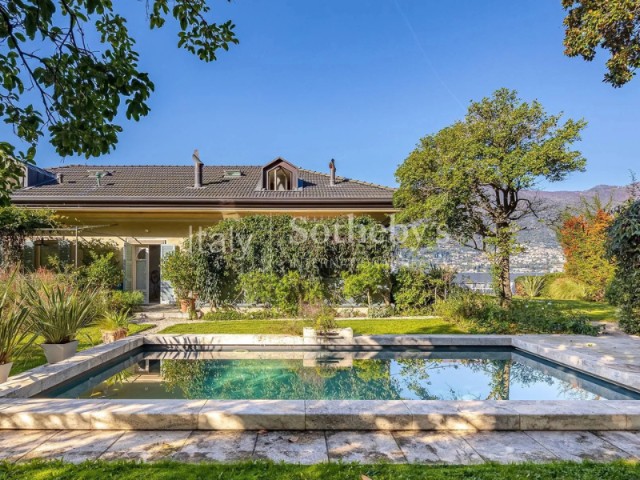
Then the garden, which is another surprise. Around a thousand square metres laid out in the English manner, lawn, borders, shade and sun in turn, with a heated pool set in the grass, shaded terraces and a mature magnolia. Beyond, the lake.
Many villas on Lake Como are admired from the water. Very few were made by it. The difference is not decorative. A boathouse is built at the exact line where the lake meets the land, at a height and a distance that no planning office would authorise today. You cannot recreate this relationship with the water by building something new; the shoreline is closed. You can only inherit it.
It is also a question of scale. The lake is full of properties that require a staff, a calendar and an administrator. This is not one of them. It is a place for a family that wants to swim before breakfast, take the boat out after lunch and be in Como's old town in minutes for dinner. The garden and the pool give it the private life of a villa; the dock gives it the freedom of the water; its size gives it back to the people who live in it.
The right custodian, I think, is someone who measures a lake property by the hours spent on the water rather than the rooms counted from the drive. Someone who understands that a building which has stood at the waterline since the nineteenth century is not a possession in the ordinary sense, but a passage of custody, with its own conditions.
When I first stood in the boathouse, the water moved slightly and the sound of it filled the room. It is the oldest sound in the villa. Everything else came after.
For a private conversation, write to me.